
 Featured Machines
 Travel CPAPs

 Most Popular Masks

 Tubes and Hoses
 Humidifier Chambers
 Machine Filters
 Power Cords
 Headgear
 Nasal Pillows
 Cushions and Seals


Telehealth Versus Clinic Costs for Sleep Apnea

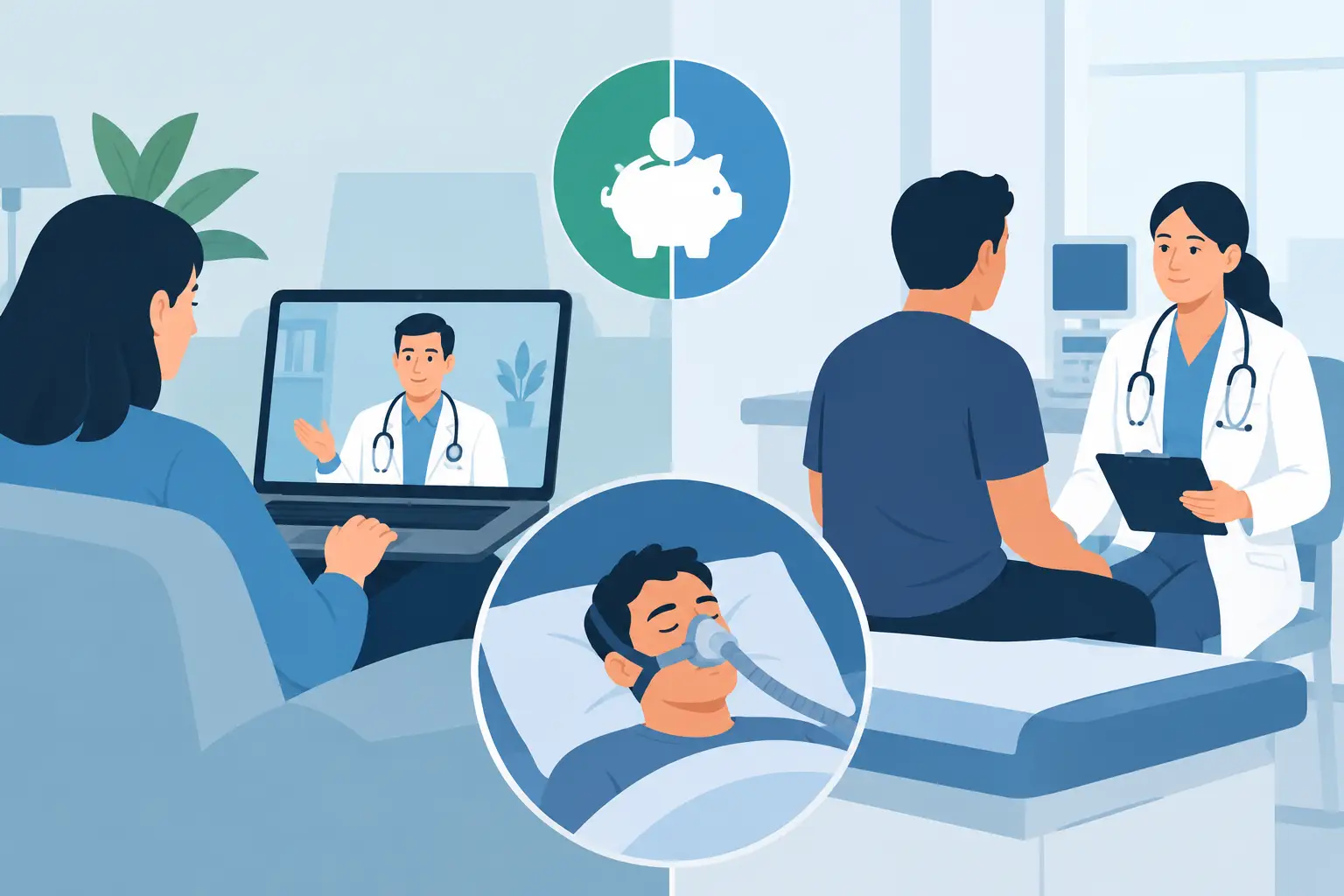
A sleep apnea evaluation can feel expensive before you even know what you need. When comparing telehealth versus clinic costs, the real question is not simply which appointment has the lower price. It is which care path gives you appropriate answers, a clear treatment plan, and less friction between your first concern and better sleep.
For many adults who snore, wake up gasping, feel exhausted during the day, or need to replace aging CPAP equipment, care from home can reduce several common expenses. Still, virtual care is not the right fit for every health situation. Knowing what each option includes can help you spend thoughtfully and move forward with confidence.
What Telehealth Versus Clinic Costs Really Include
The price you see for an appointment is only one part of sleep apnea care. A traditional clinic route may involve a primary care visit, a referral to a sleep specialist, a separate appointment, a sleep study, follow-up visits, and equipment coordination. Depending on your insurance plan and provider network, each step may have its own copay, deductible responsibility, or administrative delay.
Telehealth often condenses parts of that process. A virtual consultation may help determine whether a home sleep apnea test is appropriate, while online prescription support can make it easier for established PAP users to address documentation needs without scheduling an office visit. The cost can be easier to understand when services are presented separately and upfront.
That said, low advertised pricing does not always mean low total cost. Ask whether the listed price includes the clinical review, test interpretation, follow-up guidance, prescription support when appropriate, and shipping for a home test. Also check whether your insurance may cover some services, whether you must meet a deductible first, and whether an out-of-network charge could arrive later.
The hidden expenses of in-person care
Clinic care can carry costs that do not appear on a medical bill. Driving to appointments, parking, missed work, arranging child care, and traveling to an overnight sleep lab all affect the real price of care. For someone in a rural area or with limited mobility, these burdens may be substantial.
There is also the cost of delay. A multi-step referral process can mean waiting weeks or longer for an appointment, then waiting again for testing and results. That does not make clinic-based care a poor choice, but it is a meaningful trade-off when daytime sleepiness and disrupted sleep are already affecting daily life.
Telehealth removes much of that travel and scheduling burden. A virtual visit can often happen from home, and a home sleep apnea test lets qualifying patients sleep in their own bed rather than in an unfamiliar lab. For many people, that convenience makes it easier to begin and stay engaged with treatment.
Where Telehealth Can Lower Sleep Apnea Costs
Telehealth may lower out-of-pocket spending by reducing the number of separate appointments needed to start the evaluation process. It can also make simple follow-up needs more accessible. If you are already using CPAP therapy and need a prescription renewal, a virtual pathway may be more practical than starting over with an in-person visit.
At Affordable Sleep Solutions, an online prescription-renewal option is available for $99.99, subject to clinical review and eligibility. For a patient who needs updated documentation to purchase PAP equipment or supplies, a clear self-pay option can be easier to plan around than multiple office visits. Pricing and eligibility can change, so it is wise to confirm current details before you begin.
Home testing can also be a more affordable option than an overnight lab study for people who are appropriate candidates. These tests are generally designed to evaluate suspected obstructive sleep apnea in an at-home setting. They are not interchangeable with every type of sleep study, and a clinician may recommend a different approach based on your symptoms and health history.
The biggest financial advantage is often predictability. When you understand the price of the consultation, test, prescription process, and equipment separately, you can compare those expenses with your insurance benefits and make decisions that fit your budget. Insurance coverage checks and price-match policies can add useful support when it is time to select a machine, mask, or replacement supplies.
When a Sleep Clinic May Be Worth the Added Cost
In-person and lab-based care remains essential in some situations. A home sleep apnea test may not provide enough information if you have certain heart, lung, neurologic, or sleep-related conditions, use certain medications, or have symptoms that suggest something beyond uncomplicated obstructive sleep apnea. Your clinician may recommend an overnight sleep study when more detailed monitoring is needed.
A sleep clinic can also be valuable when diagnosis or treatment has been difficult. If a home test is negative but symptoms remain concerning, if PAP therapy is not controlling symptoms, or if you are having persistent trouble tolerating pressure, a specialist may need more detailed data and hands-on evaluation.
The same is true for complex equipment needs. Many people can choose a comfortable mask and learn basic machine setup with remote guidance, written instructions, and support. Others benefit from a more involved fitting process, pressure adjustments, or a discussion of bilevel therapy. The right level of care depends on the person, not just the price tag.
How to Compare Your Likely Costs Before You Commit
Start by mapping the care you actually need. If you have never been evaluated for sleep apnea, ask whether a virtual consultation and home sleep test are clinically appropriate. If you have an existing diagnosis and your main need is a current prescription or new equipment, ask whether virtual prescription support can meet that need.
Then look at your insurance plan with specific questions. Find out whether telehealth visits, home sleep testing, lab studies, CPAP machines, masks, and recurring supplies are covered. Ask about deductibles, coinsurance, prior authorization, network requirements, and whether you can purchase equipment from a provider of your choice. Coverage can differ significantly between testing and equipment, even within the same plan.
Also compare the cash price, not just the insured price. If you have a high deductible, a transparent self-pay telehealth pathway may cost less than several billed visits. On the other hand, if you have already met your deductible and have access to an in-network sleep lab, in-person testing may be financially sensible.
Finally, account for the ongoing cost of therapy. A CPAP machine is only part of successful treatment. Masks, cushions, filters, tubing, humidifier chambers, and other replacement supplies wear out over time. Choosing equipment that feels comfortable and understanding how to maintain it can help protect your investment and support more consistent therapy.
Cost Should Support, Not Compromise, Your Care
Affordable care should still be appropriate care. Be cautious of any option that promises a diagnosis or prescription without a qualified clinical review, ignores your medical history, or makes it difficult to understand what you are paying for. Your health information should be handled securely, and you should know how to get help if questions arise about your test, prescription, or equipment.
If telehealth is a good fit, it can offer a practical route from symptoms to testing, prescription support, and CPAP therapy without adding unnecessary travel or appointments. If a clinician recommends in-person testing, that recommendation is not a setback. It may be the clearest path to the answers and treatment you need.
The best choice is the one that respects both your budget and your breathing. Ask for clear costs, choose the level of testing that fits your health needs, and give yourself a care path that makes restorative sleep easier to reach.