
 Featured Machines
 Travel CPAPs

 Most Popular Masks

 Tubes and Hoses
 Humidifier Chambers
 Machine Filters
 Power Cords
 Headgear
 Nasal Pillows
 Cushions and Seals


Nasal Mask Versus Pillows: Which Is Best?

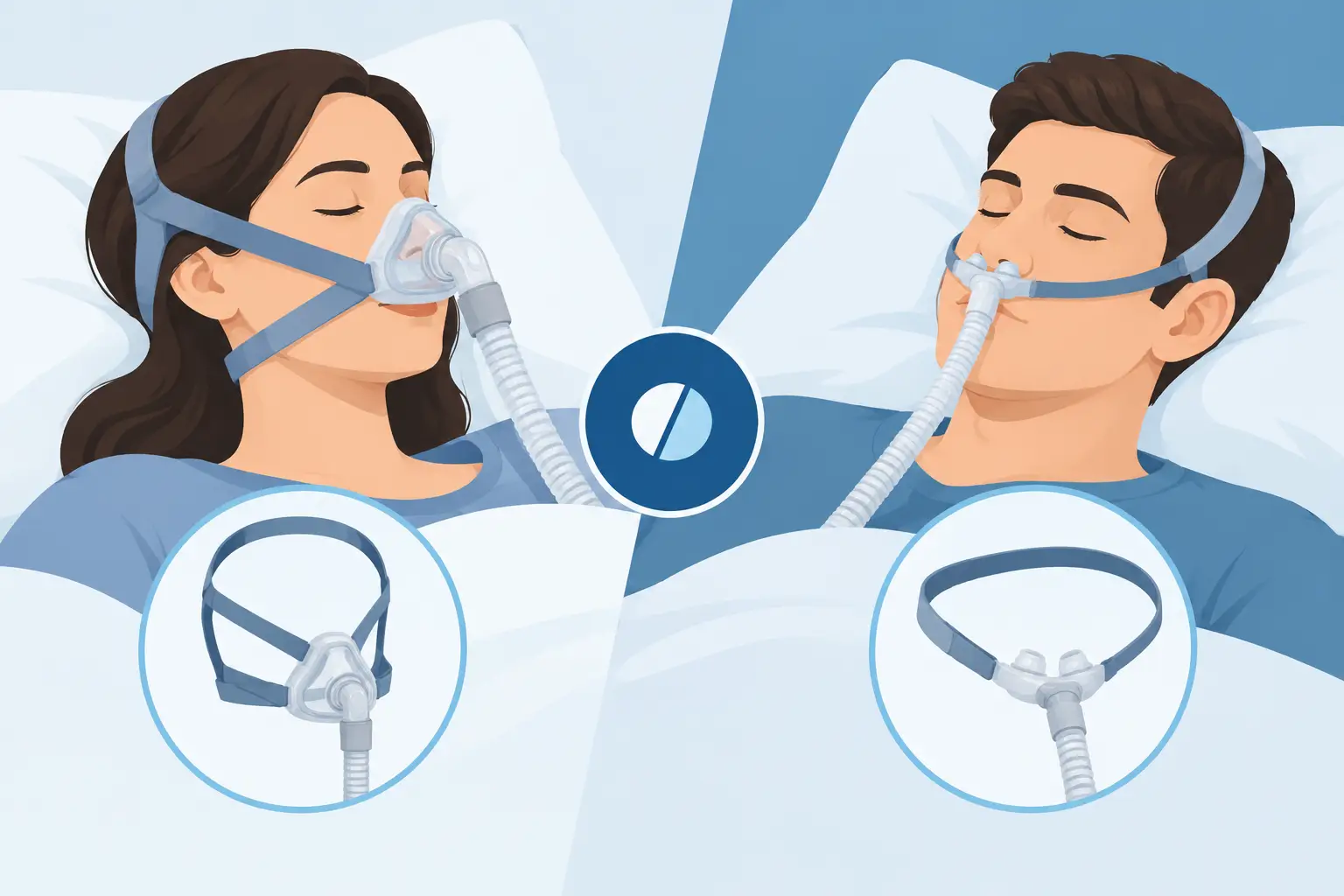
A CPAP mask can make the difference between taking your therapy off at 2 a.m. and waking up feeling like you finally rested. When comparing a nasal mask versus pillows, the right answer is not always the smallest mask or the most popular style. It is the one that delivers your prescribed therapy while feeling comfortable enough to wear through the night.
Both options are designed for people who breathe primarily through their nose during sleep. They differ in where they seal, how much of the face they cover, and how they feel when you move, sleep on your side, or turn up the pressure. Understanding those differences can help you choose with more confidence and spend less time troubleshooting leaks.
Nasal Mask Versus Pillows: The Main Difference
A nasal mask covers the nose, creating a seal around the outside of it. It is generally held in place with soft headgear and connects to your CPAP tubing at the front of the mask or above the head, depending on the model. Because the cushion has a larger contact area, many users find it feels stable and familiar.
Nasal pillows use two small, soft inserts that rest at the entrance of the nostrils. They create a seal directly at each nostril rather than around the nose. Pillow masks are usually lighter and less noticeable on the face, with less headgear and a more open field of vision.
Neither style is automatically better. A nasal mask may feel more secure for one person, while nasal pillows may give another person the freedom and minimal contact they need to stay consistent with treatment. Your pressure settings, sleep position, facial sensitivity, congestion, and personal comfort all matter.
When a Nasal Mask May Be the Better Choice
A nasal mask can be a reassuring starting point for new CPAP users, particularly if you want a broad, stable seal without the bulk of a full face mask. The cushion sits around the nose rather than inside the nostrils, which may feel gentler if your nostrils are easily irritated or dry.
This style can also work well if you use moderate to higher pressure settings. While many nasal pillow masks perform very well at higher pressures, some people prefer the less direct airflow sensation of a nasal mask. The larger cushion can make pressure feel more evenly distributed around the nose.
Nasal masks are often a practical fit for active sleepers, especially when paired with a model that has a top-of-head tube connection. That design can keep tubing farther away from the chest and arms as you change positions. Side sleepers may still need to adjust their pillow position so the mask cushion is not pushed out of place.
A nasal mask may be worth considering if you have tried pillows and experienced soreness at the nostrils, a persistent feeling of air blowing directly into your nose, or leaks that happen when you increase your therapy pressure. It offers a middle ground: less facial coverage than a full face mask, with more cushion surface than pillows.
When Nasal Pillows May Be the Better Choice
Nasal pillows are popular with people who want the least amount of mask on their face. They can be an especially comfortable option if you wear glasses before bed, read in bed, watch television, or dislike anything covering the bridge of your nose. Their compact design also makes them a convenient option for travel CPAP users.
Because pillow masks have a smaller profile, they can be a strong choice for side sleepers and people who feel crowded by traditional masks. With the right fit, they are light, quiet, and easy to move with. Many users also appreciate having fewer areas of skin covered, especially if they tend to feel warm at night.
The trade-off is that fit matters greatly. Pillows that are too small may feel like they press into the nostrils or leak. Pillows that are too large can create discomfort and may not seal consistently. The goal is for the cushion to rest gently against the nostrils, not be forced deeply inside them.
If your nose tends to become dry, heated humidification can make pillow therapy more comfortable. A heated tube and appropriately adjusted humidity may also reduce dryness, congestion, and rainout, which is moisture collecting in the tubing or mask.
Factors That Should Guide Your Choice
Your usual breathing pattern comes first. Nasal masks and nasal pillows are designed for nasal breathing. If you regularly breathe through your mouth at night, wake with a very dry mouth, or notice air escaping through your lips, either option may require added support such as a chin strap. In some cases, a full face mask may be a more effective choice. Discuss ongoing mouth leaks with your sleep care provider rather than simply tightening your mask.
Your sleep position is the next consideration. Side and stomach sleepers often like the low profile of nasal pillows, but a slim nasal mask can also work well when the cushion and tubing are positioned carefully. Back sleepers may have success with either style. If you move frequently, look for flexible tubing and headgear that stays in place without being overly tight.
Skin sensitivity can also shape the decision. Nasal pillows limit contact on the cheeks and nose bridge, which may be helpful if you get strap marks or redness in those areas. On the other hand, a nasal mask avoids direct contact at the nostrils. If either style causes irritation, check the cushion size, cleaning routine, and headgear tension before giving up on it.
Finally, consider your pressure comfort. Some people prefer nasal pillows at nearly any prescribed setting. Others find a nasal mask more comfortable when airflow is stronger. Features such as ramp settings, exhalation relief, humidification, and a properly fitted cushion can make a meaningful difference regardless of the mask style.
How to Get a Better Seal Without Overtightening
A mask should be secure, not squeezed into place. Overtightening is one of the most common reasons a cushion leaks or causes morning soreness. CPAP cushions are designed to inflate slightly with airflow and create a seal against the skin. Pulling the straps too tight can flatten that cushion and make leaks worse.
Start by washing your face to remove oils, then fit the mask while sitting upright with your device running at or near your usual therapy pressure. Adjust one strap at a time in small increments. Lie down in your typical sleep position and check again, since facial contours change when you recline.
Keep the cushion clean according to its care instructions, and replace it when it becomes stiff, discolored, oily, or difficult to seal. Cushions, headgear, filters, tubing, and humidifier chambers are wear items. Replacing aging supplies is often simpler and more effective than repeatedly adjusting a mask that has reached the end of its useful life.
Give Yourself Permission to Switch
The best CPAP mask is the one you can use consistently. If your current style leaves you with leaks, soreness, anxiety about putting it on, or the urge to remove it overnight, it may be time to try another option. A change from a nasal mask to pillows, or from pillows to a nasal mask, can improve comfort without changing the therapy your clinician prescribed.
At Affordable Sleep Solutions, the goal is to make that process feel manageable from home, with access to the equipment and support you need to breathe better and sleep deeper. Start with the mask style that matches your breathing and sleep habits, then allow yourself a little time to adjust. Comfortable therapy is not a luxury – it is part of making restorative sleep possible night after night.