
 Featured Machines
 Travel CPAPs

 Most Popular Masks

 Tubes and Hoses
 Humidifier Chambers
 Machine Filters
 Power Cords
 Headgear
 Nasal Pillows
 Cushions and Seals


How to Reduce CPAP Mouth Breathing Comfortably

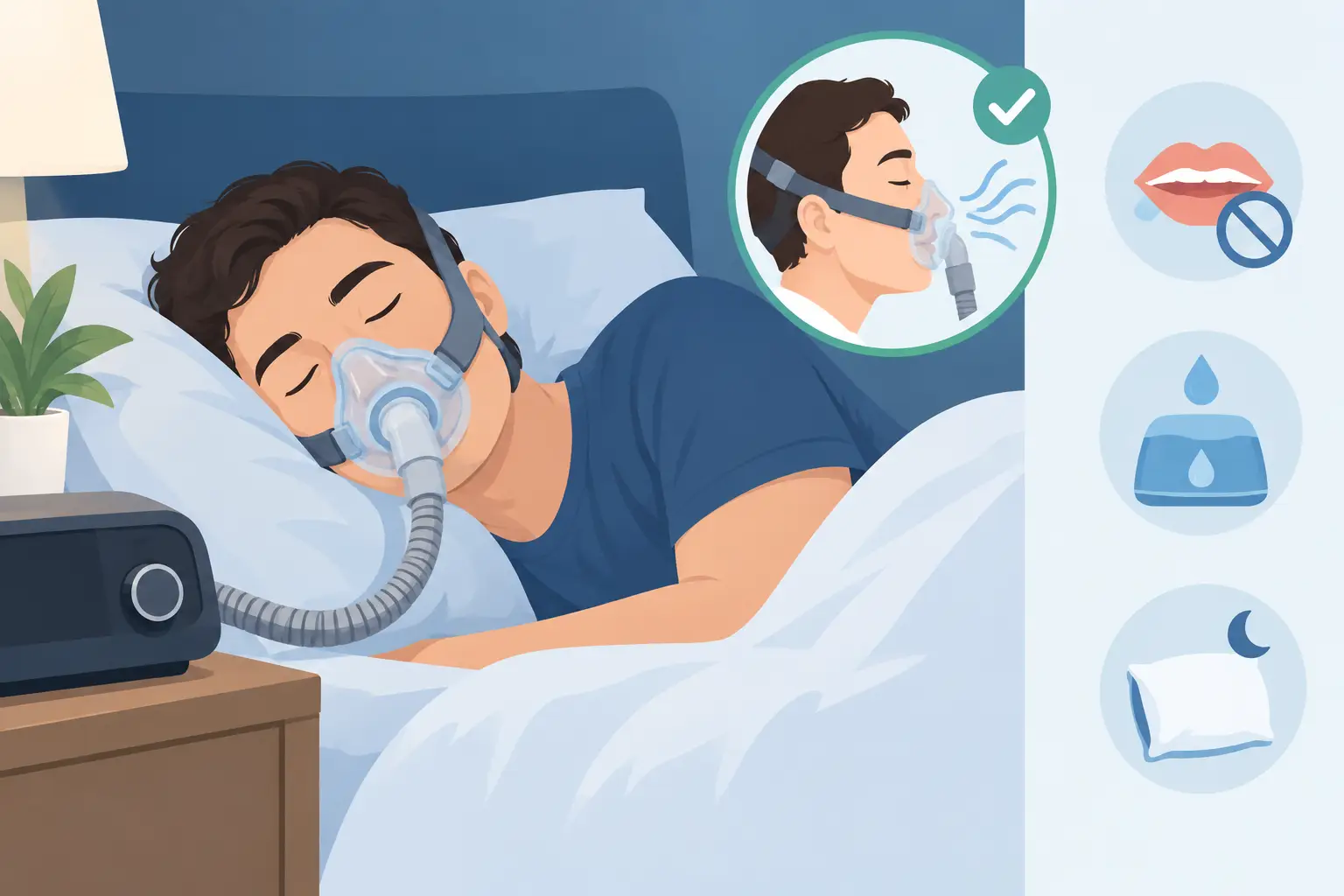
Waking with a dry mouth, noisy leaks, or a partner who hears air escaping can make a good CPAP setup feel like it is not working. Learning how to reduce CPAP mouth breathing can make therapy quieter, more comfortable, and more effective, especially if you use a nasal or nasal pillow mask. The goal is not to force yourself to keep your mouth closed. It is to identify why it opens during sleep and choose a solution that supports easier breathing.
Why CPAP Mouth Breathing Matters
With a nasal mask, your machine delivers pressure through your nose to keep your airway open. If your mouth falls open, some of that pressurized air can escape instead of supporting your airway. This is called mouth leak.
A small amount of leak is normal. Persistent or high leak can cause dry mouth, sore throat, disrupted sleep, eye irritation from shifting airflow, and a feeling that the machine is blowing too hard. It can also make therapy data less reliable and, in some cases, reduce the effectiveness of treatment.
Mouth breathing is not always a sign that you are doing something wrong. Nasal congestion, allergies, mask fit, pressure settings, sleeping position, and natural jaw relaxation can all contribute. The right answer depends on what is causing the leak in the first place.
Start With Your Mask Type and Fit
A well-fitted mask is the foundation of comfortable therapy. Before adding accessories or changing your sleep routine, check whether your current mask style matches how you breathe at night.
Nasal masks and nasal pillows
Nasal and nasal pillow masks are compact, lightweight choices that work well for many people. They are often appealing to side sleepers and anyone who prefers less facial coverage. But if you regularly breathe through your mouth due to congestion or a relaxed jaw, they may require additional support.
First, inspect the cushion and headgear. A worn cushion can leak around the nose, encouraging you to open your mouth as you try to compensate. Headgear that is too loose can shift, while straps that are too tight can flatten the cushion and create leaks of their own. Clean the cushion regularly and replace it when it loses its soft, flexible seal.
Full face masks
A full face mask covers both the nose and mouth. For people who consistently mouth breathe, it is often the most straightforward option because therapy pressure is still delivered even when the mouth opens.
There is a trade-off: full face masks have a larger footprint and may take more adjustment, particularly for active sleepers. Still, a properly fitted full face mask can be more comfortable than repeatedly waking with a dry mouth or fighting leaks from a nasal mask. If mouth breathing happens most nights, changing mask styles may be a better long-term solution than trying to work around it.
Improve Nasal Breathing Before Bed
Your nose needs to be reasonably clear for a nasal CPAP mask to feel comfortable. If it is not, your body may default to mouth breathing during sleep.
A warm shower, saline nasal spray or rinse, and a clean sleeping environment may help when mild dryness or seasonal irritation is the issue. If you have allergies, ask your healthcare provider about treatment options that fit your health history. Avoid making ongoing nasal congestion something you simply tolerate, especially if it is affecting your ability to use CPAP consistently.
Heated humidification can also make a meaningful difference. CPAP air can feel dry, particularly in winter or in air-conditioned rooms. Increasing humidifier settings gradually may reduce dryness and make nasal breathing easier. If you notice water collecting in the tubing, called rainout, lower the humidity slightly, raise the machine above mattress level if appropriate, or consider heated tubing for more consistent temperature control.
If one side of your nose is always blocked, you frequently have sinus infections, or congestion does not improve with basic comfort measures, speak with a clinician. A structural nasal concern or ongoing inflammation may need more than a mask adjustment.
Use Gentle Jaw Support When It Fits Your Needs
Some people breathe comfortably through their nose until they fall asleep and their jaw relaxes. In that situation, a CPAP chin strap may help reduce mouth opening. It should support the jaw gently, not pull it backward or feel uncomfortably tight.
A chin strap is usually most useful for occasional or mild mouth leak with a nasal mask. It may not be enough if you have significant congestion, regularly wake gasping, or naturally sleep with your mouth open. If it leaves jaw pain, headaches, marks, or a feeling of restricted breathing, stop using it and reassess the approach.
Be cautious with mouth taping. While some CPAP users discuss it as a way to keep the lips closed, it is not appropriate for everyone and can create safety concerns, particularly if you have nasal obstruction, nausea or reflux, anxiety, breathing conditions, or trouble removing the tape quickly. Do not use mouth tape without discussing it with a qualified healthcare professional who understands your sleep apnea treatment.
Check for Pressure and Comfort Issues
Sometimes mouth leak is a symptom of pressure that feels difficult to manage rather than a simple jaw issue. When pressure rises, some people puff air into their cheeks or open their mouth to release it. This can be more noticeable on an auto-adjusting CPAP machine during periods when the device responds to increased airway obstruction.
Do not change prescribed pressure settings on your own. Instead, review your therapy results and symptoms with your sleep care provider. Leak patterns, apnea events, and pressure trends can help determine whether settings need professional adjustment.
Comfort features may also help. Ramp settings allow pressure to begin lower and increase gradually after you fall asleep. Exhalation relief can make breathing out against pressure feel more natural for some users. These features are helpful when used correctly, but they cannot fix an incorrectly fitted mask or untreated nasal congestion.
Make Small Sleep-Environment Changes
Your sleeping position can affect both jaw position and mask stability. Back sleeping may allow the jaw to drop more easily for some people, while side sleeping can reduce it. A CPAP-friendly pillow, or simply a pillow that keeps the mask from being pressed into the mattress, can help prevent shifting and leaks.
Keep the tubing positioned so it has enough slack to move with you. If the hose tugs on the mask when you turn, the seal may break and wake you up. Many people find that routing the tubing above the headboard or through a hose lift reduces pulling.
It also helps to build a short pre-bed routine: refill the humidifier chamber with distilled water as directed, check the mask cushion, clear your nose if needed, and put the mask on while awake. Taking two minutes to notice the fit can prevent hours of disrupted sleep.
Know When to Ask for Help With CPAP Mouth Breathing
Contact your sleep care provider if you have ongoing dry mouth despite humidification, frequent large-leak alerts, persistent congestion, new jaw pain, or daytime fatigue even though you are using CPAP regularly. Those symptoms can point to a mask issue, equipment wear, pressure concern, or a separate health issue worth evaluating.
Replacing supplies on schedule matters, too. Cushions, headgear, filters, and humidifier chambers all affect comfort and therapy performance over time. If your equipment is aging or no longer sealing as it once did, a replacement may be a practical fix rather than another night of adjustments.
Affordable Sleep Solutions can help make that process easier, whether you need guidance on mask styles, replacement supplies, or a convenient path to prescription support. Better CPAP therapy does not have to mean tolerating a dry mouth and restless nights. A few thoughtful changes can help your treatment feel more natural, so you can breathe better and wake up ready for the day.