
 Featured Machines
 Travel CPAPs

 Most Popular Masks

 Tubes and Hoses
 Humidifier Chambers
 Machine Filters
 Power Cords
 Headgear
 Nasal Pillows
 Cushions and Seals


Nasal Pillows vs Full Face CPAP Mask: Which Fits You?

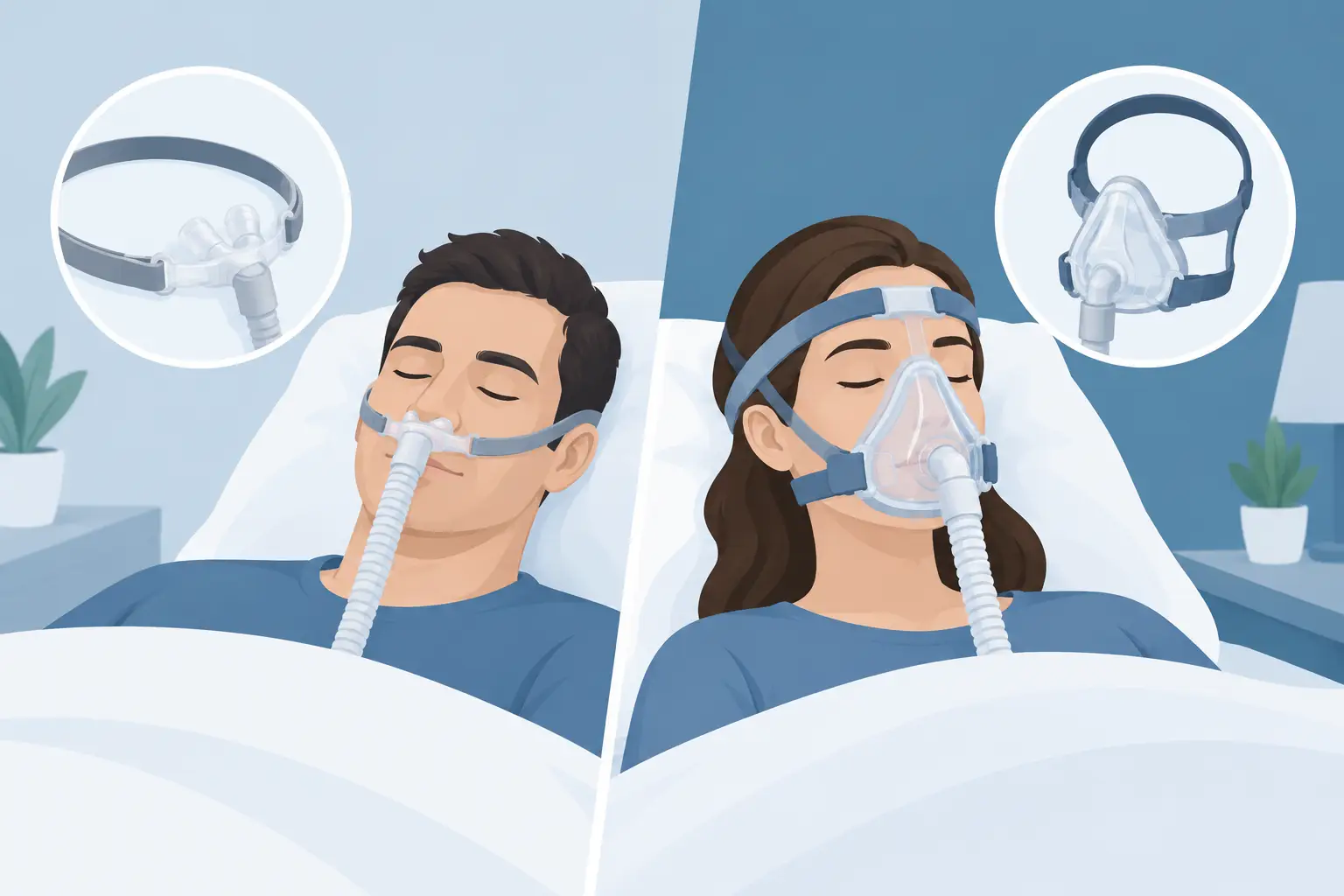
The right CPAP mask is the one you can comfortably wear all night, not simply the one that looks best on paper. When comparing nasal pillows vs full face CPAP mask options, the decision usually comes down to how you breathe, how you sleep, and what makes therapy feel sustainable night after night.
A mask that leaks, feels restrictive, or leaves you waking up to adjust it can make even an excellent CPAP machine harder to use. On the other hand, a well-fitted mask can make treatment feel far more natural – helping you breathe better, sleep deeper, and get the restorative rest your body needs.
Nasal Pillows vs Full Face CPAP Mask: The Core Difference
Nasal pillow masks are the smallest common CPAP mask style. Rather than covering your nose, they use soft cushions that rest at or just inside the nostrils. They deliver therapy air directly through the nose and are held in place with lightweight headgear.
A full face CPAP mask covers both the nose and mouth. It is designed to deliver prescribed air pressure whether you breathe through your nose, your mouth, or a combination of both while asleep.
Neither style is automatically better. The better choice is the one that supports effective therapy without disrupting your comfort, confidence, or routine. Your prescribed pressure settings, facial anatomy, nasal airflow, and sleeping habits all matter.
Why Many People Prefer Nasal Pillows
Nasal pillows are popular with people who want a less bulky feel. Because there is minimal material across the face, they can be a welcome option for CPAP users who feel claustrophobic in larger masks or dislike having their field of vision blocked.
They also work well for reading, watching television, or wearing glasses before bed. Their compact design can be especially comfortable for active sleepers, side sleepers, and people with facial hair, since there is less mask surface that needs to maintain a seal.
For many users, nasal pillows create fewer pressure marks on the bridge of the nose and cheeks. They are also a practical option for travel because the mask itself is typically lightweight and takes up very little space.
That said, nasal pillows require you to breathe primarily through your nose. If your mouth falls open during sleep, therapy air may escape through your mouth. This can cause dry mouth, noisy leaks, and reduced treatment effectiveness. Some people manage occasional mouth opening with a chin strap or by addressing nasal congestion, but persistent mouth breathing may point to a different mask style.
Nasal Pillows May Be a Good Fit If You
You may prefer nasal pillows if you are a consistent nasal breather, want the least facial coverage possible, sleep on your side or stomach, or feel uncomfortable in a larger mask. They can also be a strong choice if you wear glasses in the evening or want an easier mask for packing and travel.
Higher therapy pressures do not automatically rule out nasal pillows. However, some users find that stronger airflow can feel more noticeable at the nostrils. Proper cushion sizing, humidification, and a careful headgear adjustment can make a meaningful difference.
When a Full Face CPAP Mask Makes More Sense
A full face mask is often the more dependable choice for people who breathe through their mouth at night. It can also be helpful for people who experience frequent nasal congestion from allergies, colds, seasonal changes, or structural nasal concerns.
Because the mask covers both breathing pathways, you do not have to rely on keeping your mouth closed to receive therapy. That peace of mind matters for many new CPAP users. If you have tried a nasal mask or nasal pillows and routinely wake up with a dry mouth or see leak alerts on your machine, a full face design may provide a more consistent seal.
Full face masks can also feel more comfortable for some people at higher pressure settings because the air is distributed over a larger area. This varies from person to person, though. A larger cushion has more room to seal, but it also has more surface area that can shift with movement.
Full Face Masks May Be a Good Fit If You
A full face CPAP mask may be your better match if you regularly wake with your mouth open, have difficulty breathing through your nose, or want coverage that accommodates changing nasal congestion. It can be particularly reassuring when you are starting treatment and still learning how your breathing changes during sleep.
The trade-off is size. Full face masks are generally more noticeable than nasal pillows and may leave marks on the face if overtightened. They can also be more challenging for stomach sleepers, although newer designs offer softer cushions, flexible frames, and quieter vents that improve comfort.
Comfort Is More Than Mask Size
It is easy to assume the smallest mask will always feel most comfortable. In reality, comfort depends on a reliable seal, stable headgear, manageable airflow, and a fit that works in your usual sleep position.
A nasal pillow mask that whistles or slips every time you roll over will not feel comfortable for long. Likewise, a full face mask that lets you breathe without dry mouth may be far more comfortable than a smaller mask that requires constant adjustments.
Avoid tightening a mask until it feels squeezed against your skin. Over-tightening can flatten the cushion, create sore spots, and sometimes make leaks worse. Most modern cushions are designed to inflate gently against the face when CPAP airflow begins. Start with a clean cushion, adjust the straps evenly, and test the seal while lying in the position you use for sleep.
If your machine includes a mask-fit feature, use it. This quick check can help you identify leaks before you settle in for the night.
Consider Your Sleep Position and Bedtime Routine
Side sleepers often appreciate nasal pillows because their smaller profile has less contact with the pillow. Still, many side sleepers successfully use full face masks by choosing a flexible design and positioning the edge of the mask near the pillow rather than pressing it directly into the pillow.
Stomach sleeping can be harder with any CPAP mask, but minimal-contact nasal pillows may offer more freedom. Back sleepers have the widest range of workable options, as long as the mask remains stable and the seal stays intact.
Think about what happens before you fall asleep, too. If you like to read with glasses on, nasal pillows may feel less intrusive. If you often deal with a stuffy nose at bedtime, a full face mask may prevent a frustrating interruption to therapy later in the night.
Dry Mouth, Congestion, and Humidification
Dry mouth is one of the clearest signs that mouth leak may be affecting nasal pillow or nasal mask therapy. It can also happen with a full face mask when humidity is too low or when significant leaks are present. Heated humidification can add moisture to therapy air and make treatment more comfortable, especially in dry climates or during colder months.
Nasal dryness or irritation can occur with nasal pillows, particularly when the cushion size is wrong or the airflow feels intense. A properly sized pillow should create a gentle seal without being forced too far into the nostrils. Replacing worn cushions on schedule also helps maintain comfort and reduce leaks.
For recurring congestion, do not assume you simply have to tolerate poor sleep. Discuss ongoing nasal breathing concerns with a qualified clinician. Treating the underlying issue may expand your mask options and make CPAP therapy easier to maintain.
Give Your Mask an Honest Trial
The first mask you try does not have to be your forever mask. Your needs may change after a few weeks of therapy, after a pressure adjustment, or when seasonal allergies return. Pay attention to useful clues: dry mouth, red marks that linger, frequent leak alerts, waking from noise, or removing the mask in your sleep.
Keep the process practical. Make one change at a time, such as adjusting the fit, replacing an older cushion, increasing humidification within your care guidance, or trying a different mask style. Changing everything at once can make it difficult to tell what actually improved your sleep.
Affordable Sleep Solutions can help make this part of treatment more manageable, with accessible equipment options and support for finding the supplies that fit your prescribed therapy.
The Best Mask Is the One You Will Keep Wearing
Choosing between nasal pillows and a full face CPAP mask is not about picking the most popular style. It is about finding a secure, comfortable way to receive therapy every night. If you breathe easily through your nose and want minimal facial coverage, nasal pillows may be an excellent fit. If mouth breathing or congestion is part of your sleep, a full face mask may offer the consistency you need.
Give yourself permission to prioritize comfort. A mask that helps you stay asleep, maintain a good seal, and wake up ready for the day is doing exactly what it should.