
 Featured Machines
 Travel CPAPs

 Most Popular Masks

 Tubes and Hoses
 Humidifier Chambers
 Machine Filters
 Power Cords
 Headgear
 Nasal Pillows
 Cushions and Seals


CPAP Compliance Requirements Guide for 2026

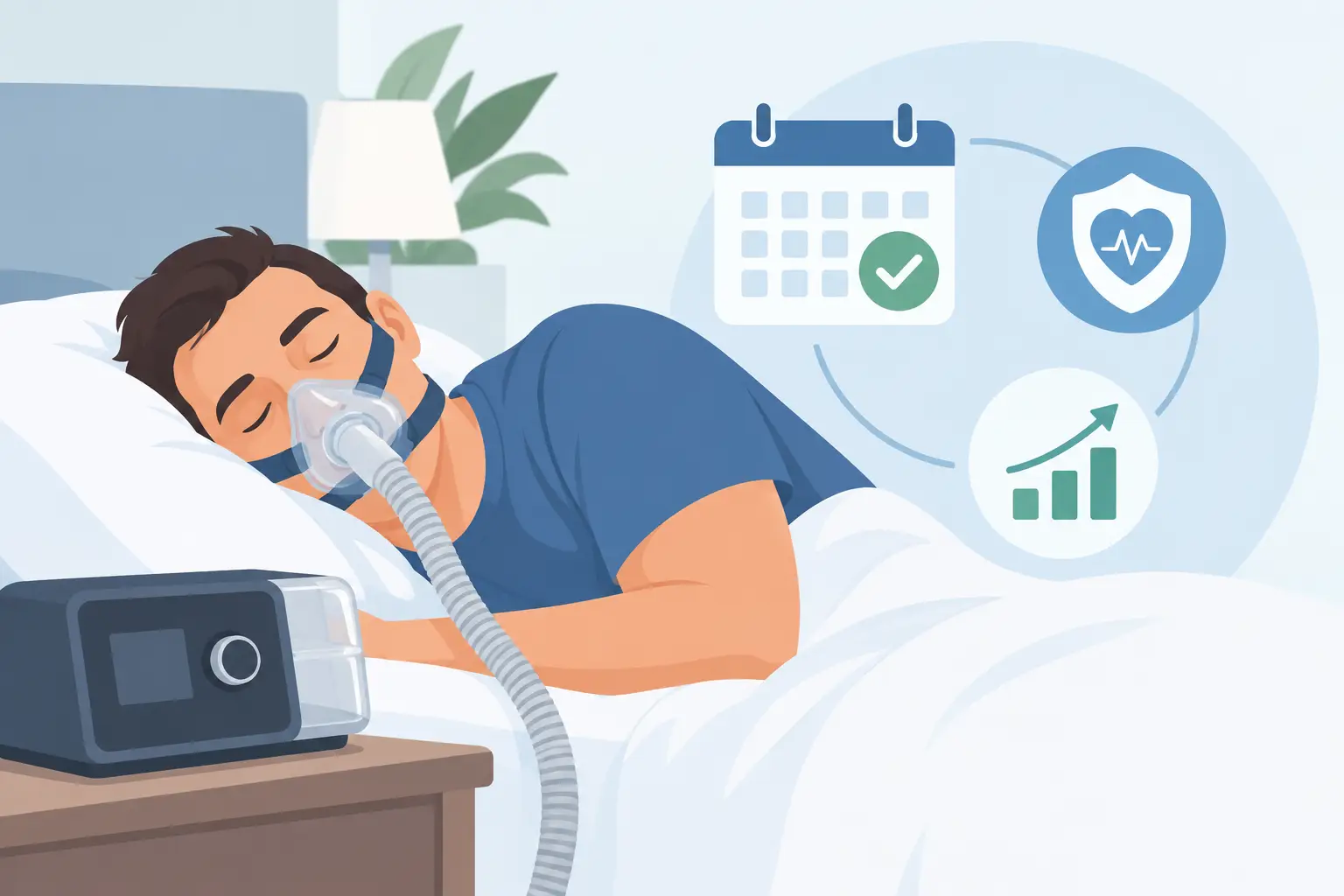
A new CPAP machine can feel like a fresh start, until you hear the word “compliance.” This CPAP compliance requirements guide explains what that term usually means for Medicare and private insurance, how your machine records use, and what to do if comfort problems are getting in the way. The goal is not to create pressure around sleep. It is to help you keep treatment affordable, effective, and comfortable enough to use consistently.
What CPAP compliance actually means
CPAP compliance is a record of how regularly you use your prescribed PAP therapy. Your machine tracks when you use it, for how long, and often how well the therapy is working. Depending on your device and setup, that information may be sent through a secure cellular connection or read from an SD card.
For insurance purposes, compliance is usually measured by usage time, not by whether you had a perfect night of sleep. A common benchmark, especially under Medicare rules, is using the device for at least four hours per night on 70% of nights during a consecutive 30-day period. Four hours is an insurance threshold, not necessarily the best health target. For many people with sleep apnea, wearing CPAP whenever they sleep, including naps, offers the most consistent symptom relief and protection.
Compliance requirements can feel administrative, but they serve a practical purpose: insurers want documentation that the treatment is being used and benefiting you before they continue to cover a rented device or replacement supplies. The details depend on your plan, so your insurer and equipment provider should always be your source for plan-specific confirmation.
Medicare CPAP compliance requirements
Medicare commonly starts CPAP therapy with an initial trial period. During the first 90 days, you generally need to meet the four-hours-per-night, 70%-of-nights standard over a consecutive 30-day window. You also typically need a follow-up visit with your treating provider between day 31 and day 91 after starting therapy.
At that visit, the provider documents that you are using the therapy and experiencing benefit from it. Benefit may include less daytime sleepiness, fewer awakenings, improved concentration, reduced snoring reported by a bed partner, or simply better-rested mornings. Bring up any problems honestly. A mask leak, dry mouth, congestion, or pressure discomfort does not mean therapy has failed. It means your setup may need adjustment.
If the requirements are met, Medicare can continue coverage under its rental arrangement, subject to your coverage and supplier rules. If they are not met, you may need additional clinical follow-up or a new qualification process before coverage resumes. Do not wait until the end of the trial if your data is low. Early support gives you more time to find a mask and comfort settings that work.
Private insurance plans may use different rules
Many commercial insurance plans use a compliance standard similar to Medicare’s, but their timing, documentation, rental terms, copays, and supply rules can differ. Some plans may ask for a compliance download at a certain point; others may require prior authorization or an office note. A plan may also have its own definition of which supplies are covered and when.
That is why it helps to check benefits before ordering. Ask whether your plan covers the machine as a rental or purchase, whether a compliance report is needed, and which provider visit documentation is required. If your coverage is limited or you are paying out of pocket, compare the total cost of the machine, mask, and recurring supplies rather than focusing only on the initial device price.
How your CPAP machine tracks use
Most modern CPAP and APAP machines record more than total hours. They may show mask leak, apnea-hypopnea index (AHI), pressure information, and humidifier settings. These metrics can help your sleep care team identify why you may still feel tired or why the mask comes off overnight.
For compliance, the most important data point is usually usage. Turning the machine on while you are awake just to add hours is not a helpful workaround. It can distort clinical data, does not address the reason treatment is difficult, and may not meet plan expectations if the data suggests the therapy is not genuinely being used.
Instead, look at your machine’s app or display as a coaching tool. If you are averaging three hours, the next step may be getting through the early-morning stretch with a more comfortable cushion, reduced leaks, or better humidity. Small improvements can make a meaningful difference in both your comfort and your compliance record.
A practical CPAP compliance routine
The easiest way to build usage is to make CPAP part of the same routine as brushing your teeth or setting an alarm. Put the mask on when you get into bed, not after you are already drowsy. This gives you a few minutes to settle in, check the seal, and make any needed adjustment before sleep.
If you remove the mask during the night, put it back on when you wake up if you can. A partial night is still useful data, and it helps your body become familiar with treatment. Consistency tends to improve faster when people focus on progress instead of treating one uncomfortable night as a reason to stop.
Use the ramp feature if the starting pressure feels too strong. Ramp begins therapy at a lower pressure and increases gradually. Heated humidification can ease dryness and nasal irritation, while heated tubing can help reduce condensation in the hose. These settings are personal. More humidity is not always better if it causes moisture buildup, and a lower temperature may feel more comfortable for some sleepers.
Comfort problems that can lower your usage
Most early compliance struggles are solvable, but the solution depends on the problem. A mask that leaks may need a different size, cushion, or style rather than tighter straps. Overtightening can flatten the cushion and make leaks worse. Nasal masks and nasal pillows are often less bulky, while full-face masks may suit people who breathe through their mouth or deal with frequent nasal congestion.
Dry mouth can point to mouth breathing, a leak, or humidity settings that need attention. Nasal stuffiness may improve with humidity adjustments, regular cleaning, or guidance from your clinician on safe options for your situation. If you have skin irritation, inspect the cushion and headgear, clean them according to the manufacturer’s instructions, and replace worn components on schedule.
Pressure discomfort deserves a conversation with your prescribing clinician. Do not change prescribed pressure settings on your own. An APAP device, pressure relief feature, bilevel therapy, or a revised treatment plan may be appropriate in some cases, but those decisions should be based on your prescription and therapy data.
Keep equipment in working order
A well-maintained setup supports comfortable, reliable treatment. Empty and refresh the humidifier chamber as directed, clean the mask cushion regularly, and replace filters and other supplies according to the manufacturer’s guidance and your coverage schedule. Oils from skin and hair can reduce a mask seal over time, while stretched headgear and a worn cushion can create leaks that interrupt sleep.
Keep your machine where it has stable airflow and where the hose can reach without pulling. For travel, pack the device in its protective case and bring the power supply, mask, and any adapter you may need. A travel CPAP can be a practical option for frequent travelers, but confirm that it matches your prescription needs and understand how its humidification and power features differ from your home machine.
When to ask for help
Contact your sleep care provider or equipment support team promptly if you cannot tolerate the mask, wake feeling short of breath, notice persistent large leaks, or are not seeing improvement after an adjustment period. Therapy data can reveal issues that are hard to identify from memory alone.
People who drive commercially or need treatment documentation for an employer may face separate workplace or medical-certification rules. Those requirements are not automatically the same as insurance compliance rules. Check with your employer, medical examiner, and treating clinician so you understand the standard that applies to you.
At Affordable Sleep Solutions, the focus is on making the path from prescription support to equipment and replacement supplies feel manageable from home. Whether you are new to PAP therapy or returning after a break, the right mask fit, settings support, and timely supply replacement can turn compliance from a stressful deadline into a steadier habit.
Better CPAP use rarely comes from forcing yourself through discomfort. It comes from noticing what interrupts your sleep, asking for practical support early, and giving yourself the comfort needed to breathe better and sleep deeper night after night.