
 Featured Machines
 Travel CPAPs

 Most Popular Masks

 Tubes and Hoses
 Humidifier Chambers
 Machine Filters
 Power Cords
 Headgear
 Nasal Pillows
 Cushions and Seals


CPAP Congestion Causes and How to Feel Better

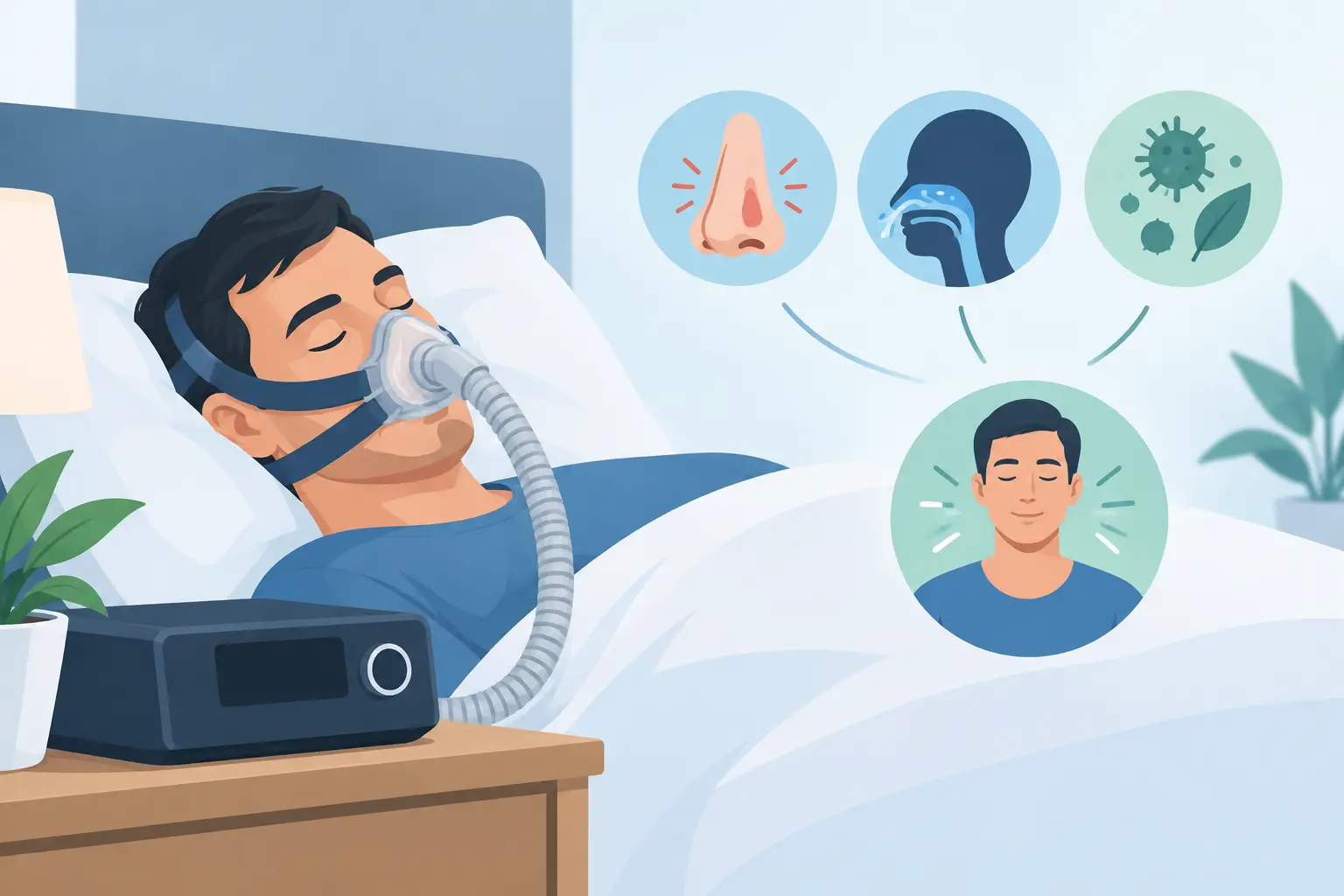
Waking up with a blocked nose can make a therapy that is meant to help you breathe feel frustrating. CPAP congestion causes are often manageable, and they do not automatically mean CPAP therapy is not right for you. The key is identifying whether your nose is reacting to dryness, too much moisture, a mask leak, allergies, or an equipment issue.
Nasal congestion is a common reason people struggle to use their CPAP consistently, especially during the first few weeks of treatment. Small comfort adjustments can make a meaningful difference. With the right setup and clean, well-fitting supplies, many people can breathe better, sleep deeper, and stay on track with therapy.
Common CPAP Congestion Causes
Dry air irritating the nasal passages
CPAP therapy delivers a steady stream of air, which can dry the delicate lining of your nose. When nasal tissues become dry and irritated, they may swell and produce more mucus as a protective response. The result can feel like stuffiness, a runny nose, burning, or frequent sneezing.
This is especially common in dry climates, during winter heating season, or when you use a CPAP without humidification. If congestion is worse in the morning and your nose feels dry or sore, low humidity may be contributing.
A heated humidifier can add moisture to the airflow and reduce irritation. Start with a modest setting and increase it gradually over several nights. The goal is comfortable breathing, not the highest possible humidity setting.
Too much humidity or rainout
More humidity is not always better. If the humidifier setting is too high, the air can feel overly damp and may trigger a stuffy sensation for some users. Excess moisture can also collect in the tubing, a problem called rainout. You may hear gurgling, feel water droplets on your face, or wake up because cool water has reached the mask.
Cool bedroom temperatures make rainout more likely. A heated tube can help maintain a consistent air temperature from the humidifier to the mask. If you do not use heated tubing, lowering the humidifier setting slightly, placing the machine below mattress level, or keeping the tubing under the covers can help reduce condensation.
Finding the right humidity level takes a little trial and error. Change only one setting at a time, then give your body a few nights to respond.
Mask leaks and mouth breathing
A mask leak can create a focused stream of air that dries the nose and may leave you congested by morning. Leaks are not always loud. Signs can include dry eyes, a dry mouth, red marks around the mask seal, or a therapy report that shows higher leak levels.
Mouth breathing is another common source of dryness. If you use a nasal mask or nasal pillows and your mouth opens during sleep, pressurized air can escape through your mouth. Your nose may then feel dry, irritated, or blocked when you wake up.
A properly sized mask and fresh cushion are often the first places to start. Mask cushions gradually lose their ability to seal, even if they still look acceptable. Some people benefit from a chin strap, while others are more comfortable in a full face mask that accommodates both nose and mouth breathing. The best option depends on your breathing habits, comfort preferences, and prescribed therapy settings.
Allergies, colds, and sinus conditions
Not every stuffy nose is caused by CPAP equipment. Seasonal allergies, pet dander, dust, a cold, sinus inflammation, and structural nasal concerns can all make CPAP use harder. If you already tend to wake with congestion, CPAP airflow may simply make an existing issue more noticeable.
Pay attention to timing. Congestion that appears only during pollen season or after exposure to a pet may point to allergies. Facial pain, thick discolored mucus, fever, or symptoms that persist beyond a typical cold deserve medical attention. Ongoing one-sided blockage, frequent nosebleeds, or severe sinus pressure should also be evaluated by a healthcare professional.
For allergy-related symptoms, keep the sleep environment clean and consider discussing treatment options with your clinician. Use only saline rinses, sprays, or medications that are appropriate for you. Some decongestant sprays can cause rebound congestion when used for too long, so they should not become a nightly workaround without medical guidance.
Dirty filters, tubing, or humidifier chambers
Your CPAP system brings air directly to your airway, which makes regular cleaning and replacement especially worthwhile. A dirty or overdue filter can allow more dust and airborne particles into the airflow. Mineral buildup in a humidifier chamber and moisture left sitting in tubing can also affect comfort and hygiene.
Follow the cleaning schedule provided for your machine, mask, tubing, chamber, and filter. Empty remaining water from the humidifier each morning, allow the chamber to dry, and use distilled water when your device instructions recommend it. Replace disposable filters and worn supplies on schedule. Fresh filters, cushions, and tubing can support a cleaner, more comfortable therapy experience.
How to Narrow Down What Is Causing Your Congestion
Start with a simple pattern check rather than changing every part of your routine at once. Consider when the congestion begins, whether your nose feels dry or damp, and whether you have signs of a leak. Review your machine’s humidifier setting and inspect the tubing and chamber for condensation or buildup.
If your symptoms began after a change in weather, bedroom temperature, mask style, or replacement supply, that detail matters. For example, a dry nose after turning off the humidifier suggests low moisture. A stuffy nose plus water in the tubing suggests that humidity or temperature may need adjustment. Congestion that continues all day, not just after CPAP use, is more likely connected to allergies, illness, or another nasal concern.
Keep a brief note for several nights if needed. Record your humidity setting, room temperature, mask type, and how your nose feels when you wake. That information can make it easier to spot a pattern and discuss the issue with your sleep care provider.
Practical Ways to Make CPAP Breathing More Comfortable
Begin with the simplest adjustment: make sure your humidifier is filled properly and set at a comfortable level. If dry air seems to be the issue, raise humidity one step. If you feel overly stuffy or see condensation, lower it one step. A heated tube may be worth considering when changing bedroom temperatures are causing rainout.
Next, check your mask fit before bed. Clean skin and a clean cushion help create a better seal. Avoid overtightening the headgear, which can distort the cushion and make leaks worse. If the mask has become difficult to seal despite careful adjustment, the cushion may need replacement.
For nasal dryness, a saline spray or saline gel designed for nasal use may provide comfort before bed. Ask a pharmacist or healthcare professional if you are unsure which option is appropriate, particularly if you have a medical condition or use other medications. Do not put oils, petroleum products, or unapproved substances inside your mask, tubing, or humidifier chamber.
A clear bedroom environment also matters. Wash bedding regularly, keep pets out of the bedroom if dander is a trigger, and reduce dust around the nightstand and machine. Place your CPAP on a stable, clean surface where the air intake is not blocked by curtains, bedding, or clutter.
If you are a regular mouth breather, do not assume you must tolerate a dry mouth and congested nose. A different mask design may offer a more comfortable path to consistent treatment. Your prescription and therapy needs should guide any equipment change, but comfort is part of effective CPAP care.
When to Contact Your Sleep Care Provider
Reach out for support if congestion is persistent, severe, or preventing you from using CPAP. Your sleep care provider can review mask leaks, comfort settings, therapy data, and whether another mask style or humidity approach may be appropriate. They can also help you decide when nasal symptoms need evaluation by a primary care clinician or ear, nose, and throat specialist.
Do not change your prescribed pressure settings on your own to solve congestion. Pressure is set to treat obstructive sleep apnea, while nasal comfort is usually addressed through humidification, mask fit, supplies, and treatment of the underlying nasal issue.
Seek prompt medical care for trouble breathing while awake, chest pain, significant facial swelling, high fever, or signs of a serious allergic reaction. Those symptoms need more than an equipment adjustment.
Comfortable CPAP therapy is rarely about pushing through a problem night after night. A clean setup, the right level of humidity, and a mask that fits your breathing style can turn congestion from a barrier into a solvable part of your at-home sleep routine. If you need replacement supplies or help finding a comfort-focused setup, Affordable Sleep Solutions can help make the next step feel clear and manageable.