
 Featured Machines
 Travel CPAPs

 Most Popular Masks

 Tubes and Hoses
 Humidifier Chambers
 Machine Filters
 Power Cords
 Headgear
 Nasal Pillows
 Cushions and Seals


CPAP Tubing: Choose, Clean, and Replace It

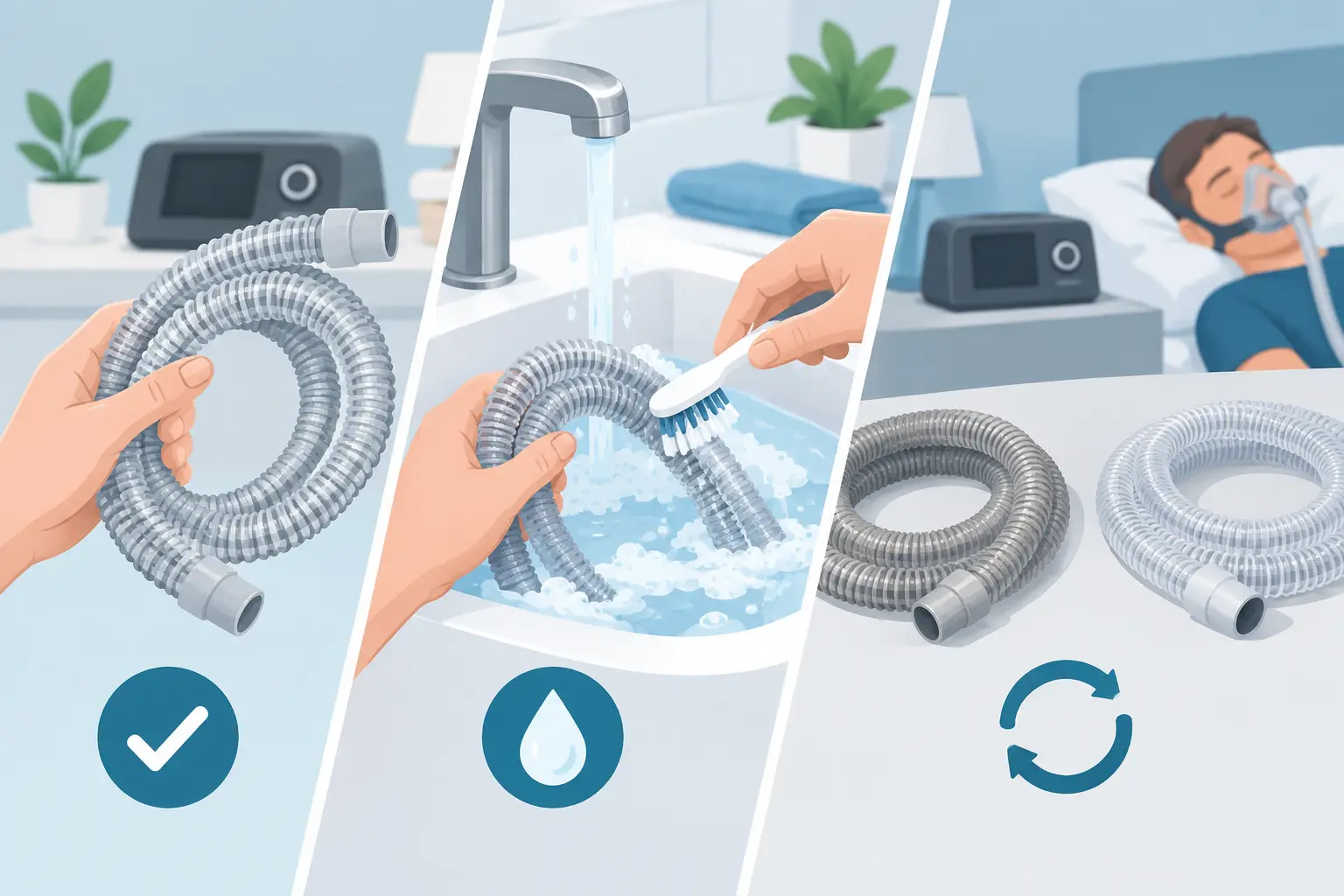
A CPAP machine can deliver the right pressure, but CPAP tubing is what carries that therapy from the device to your mask every night. When the hose is the wrong type, damaged, poorly dried, or not connected securely, even a well-adjusted setup can feel less comfortable. A little attention to this often-overlooked part of your equipment can support quieter, more consistent therapy and help you breathe better, sleep deeper.
What CPAP tubing does during therapy
CPAP tubing, sometimes called a CPAP hose or air tube, creates the pathway between your machine and mask. It needs to stay open and connected so your prescribed airflow reaches you without significant leaks. Most standard tubing is about six feet long, giving you room to shift positions without pulling on the mask or machine.
The hose also plays a role in how humidified air feels. If you use a heated humidifier, warm moisture travels through the tubing before it reaches your airway. In a cool bedroom, that air can cool down along the way and form condensation inside the tube. That is why some people wake to a gurgling sound or droplets near the mask, often called rainout.
A hose does not change your prescribed pressure setting. Still, a hole, loose cuff, or poorly seated connection can create a leak that makes therapy feel less effective or less comfortable. If your machine reports a sudden increase in leak, the tubing is one of the first things worth checking.
Choosing the right CPAP tubing for your setup
The best tubing is the one that fits your specific machine, humidifier, mask connection, and sleep preferences. Compatibility matters, especially if you are considering heated tubing. Before ordering a replacement, check your machine model and the manufacturer guidance for approved hose types.
Standard tubing
Standard CPAP tubing is a practical choice for many users. It is generally lightweight, flexible, and compatible with common 22 mm connections. If your bedroom temperature is fairly stable and you do not regularly experience rainout, standard tubing may provide everything you need.
Its main benefit is simplicity. It is often less expensive than a heated option and easy to replace. The trade-off is that it cannot actively maintain the temperature of humidified air as it moves from your machine to your mask.
Slim or lightweight tubing
Slim tubing has a narrower profile than traditional hoses. Some sleepers prefer it because it feels lighter around the pillow and may be easier to manage if you move frequently at night. It can also be convenient for travel when packing space matters.
However, lighter is not always better for every setup. Some slim hoses may require a machine setting adjustment or have specific compatibility requirements. Use the tube type recommended for your device rather than assuming all hoses work the same way.
Heated tubing
Heated CPAP tubing uses a built-in heating element to help keep the air temperature more consistent. It is especially helpful for people who use higher humidity settings, sleep in a cooler room, or regularly deal with condensation in the hose or mask.
For many people, heated tubing can make inhaled air feel warmer and more comfortable. The trade-off is cost and compatibility. Heated hoses are device-specific in many cases, and they need the proper electrical connection at the machine. They are not simply interchangeable with a standard hose.
If dry mouth, nasal dryness, or rainout has made therapy harder to maintain, a heated humidifier and compatible climate-control tubing may be worth discussing as part of a more comfortable setup.
How to connect and position your hose
Attach one end of the tubing firmly to the air outlet on your CPAP machine or humidifier chamber, depending on the design of your system. Attach the other end to the mask elbow or short tube. Both connections should feel secure, but you should not need excessive force.
Before bed, look over the full length of the hose. Make sure it is not sharply bent, trapped under furniture, twisted around the headboard, or stretched tightly across the bed. A hose lift or simple routing over the headboard can keep the tube from tugging on your mask as you turn.
If you use heated tubing, confirm that the electrical end is aligned correctly and fully connected before starting the machine. Never force a connection. If it does not fit easily, pause and verify that you have the correct tubing for your device.
How to clean CPAP tubing safely
Routine cleaning helps remove moisture, dust, and normal buildup before it becomes an odor or comfort problem. Always follow the instructions that came with your machine and tubing, since cleaning recommendations can vary by product.
For most standard hoses, disconnect the tubing from the machine and mask, then rinse it with warm water and a small amount of mild soap. Gently move the water through the hose, rinse thoroughly, and hang it where both ends can drain. Let it air-dry completely away from direct sunlight before reconnecting it for therapy.
Do not use bleach, harsh household cleaners, alcohol, or strongly scented soaps. These products can damage materials or leave residue that you may breathe in during therapy. Avoid putting tubing in a dishwasher unless the manufacturer specifically says it is safe.
Be cautious with ozone- or UV-based cleaning devices as well. Some equipment manufacturers warn that these methods may damage PAP components or affect warranty coverage. Manual cleaning with mild soap and water is usually the straightforward, affordable approach.
Heated tubing deserves a little extra care. Do not immerse electrical connectors in water. Clean the hose portion only as directed by its manufacturer, keep the connection end dry, and allow all parts to dry fully before use.
Preventing rainout and nighttime discomfort
Rainout happens when warm, humidified air cools and turns into water inside the tube or mask. It is frustrating, but it does not necessarily mean your equipment is failing. Often, a few comfort adjustments solve the issue.
Try placing the CPAP machine slightly lower than your mattress so any condensation is less likely to run toward your mask. You can also raise the bedroom temperature a little, reduce the humidifier setting by one level, or use a fabric hose cover to insulate standard tubing. For recurring rainout, heated tubing is often the most reliable option when your machine supports it.
If air feels too dry instead, check the water chamber and consider whether your humidity setting is too low. Use only distilled water in your humidifier chamber unless your equipment instructions say otherwise. A dry chamber, a disconnected hose, or a room with very dry air can all make nasal and throat dryness more noticeable.
When to replace CPAP tubing
Tubing does not need replacement on a fixed schedule for every person, but it should be replaced when condition or performance calls for it. Inspect it regularly under good light, especially if you notice leaks, unusual noise, or a change in comfort.
Replace the hose if you find cracks, pinholes, stretched ends, loose or damaged cuffs, discoloration that does not wash away, persistent odor, or moisture that will not dry. You should also replace it after an illness if your clinician or equipment instructions recommend doing so, or whenever the tubing no longer forms a secure connection.
Many CPAP users replace their hose about every three to six months, depending on the product, use, cleaning routine, and insurance coverage. A heated hose may have a different recommended replacement interval than a standard hose. Keeping a spare on hand can prevent a worn-out tube from interrupting your therapy while you wait for a replacement.
A quick troubleshooting check for leaks
When you hear whistling, feel air escaping, or see a higher-than-usual leak reading, start with the simplest checks. Disconnect and reconnect both tubing ends, then look for tears along the full hose. Check the mask cushion and elbow too, since the leak may not be coming from the tube.
If the tubing looks intact, make sure the machine is set for the type of hose you are using when that setting is available. For heated systems, verify the connector is dry and seated properly. Persistent leaks, pressure concerns, or discomfort that does not improve may be a reason to contact your sleep care provider for personalized guidance.
Your CPAP tubing is a small part of your setup, but it supports every breath of treatment you receive. A clean, compatible, well-positioned hose can make the path to restorative sleep feel simpler – and help you stay with the therapy that helps you feel more rested each day.