
 Featured Machines
 Travel CPAPs

 Most Popular Masks

 Tubes and Hoses
 Humidifier Chambers
 Machine Filters
 Power Cords
 Headgear
 Nasal Pillows
 Cushions and Seals


A Practical CPAP Supply Replacement Schedule

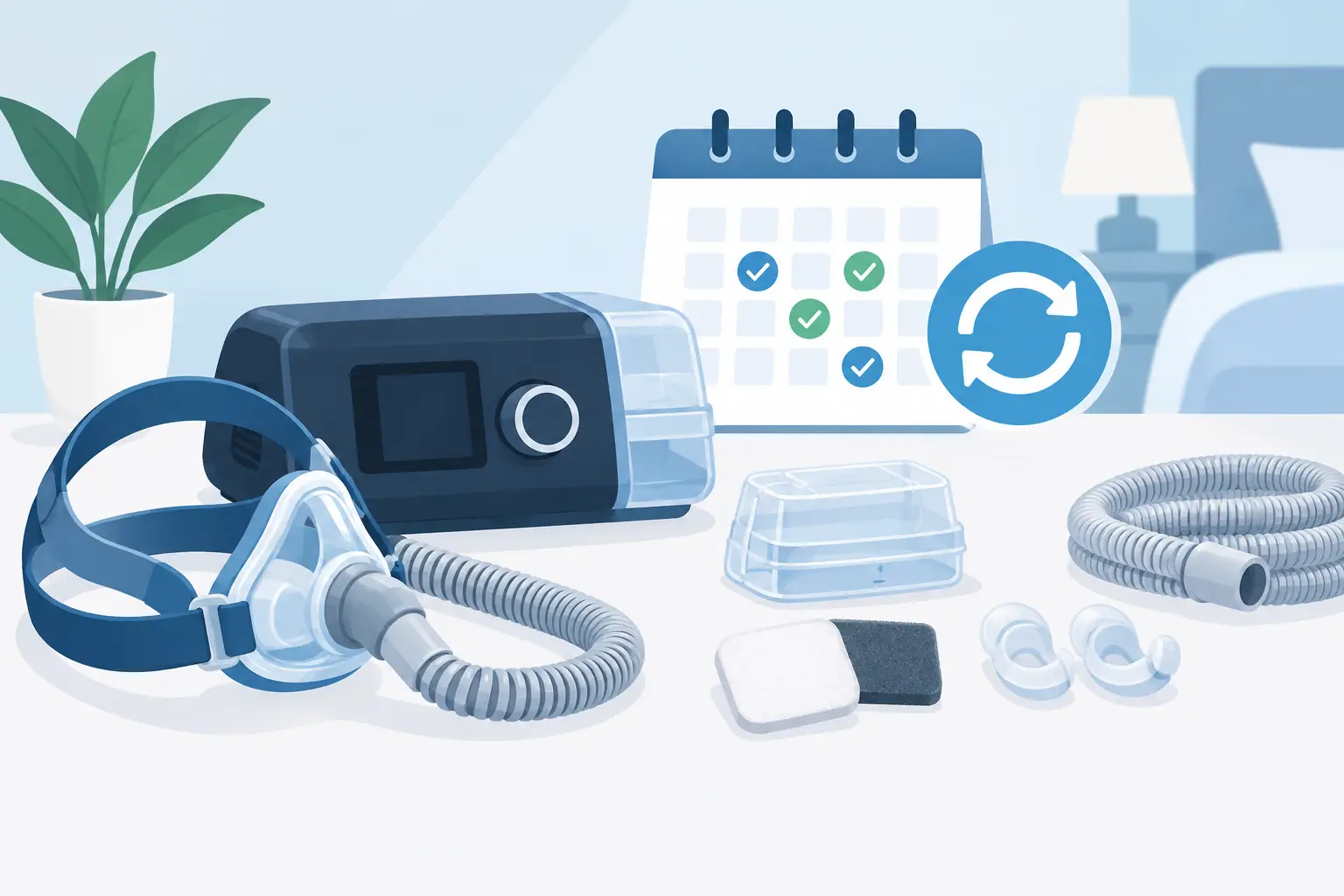
That mask cushion that once felt soft and secure can slowly become the reason you wake up with air leaks, dry eyes, or red marks on your face. CPAP parts do not usually fail all at once. They wear down gradually, which is why a clear CPAP supply replacement schedule can protect the comfort and consistency of your therapy.
Replacing supplies on time is not about buying more than you need. It is about keeping the equipment you rely on clean, comfortable, and able to deliver the treatment your provider prescribed. Your exact timing can vary based on your mask style, cleaning routine, skin oils, household environment, and insurance coverage. Still, having a practical baseline makes it easier to plan ahead.
Why CPAP Supplies Need Regular Replacement
Every night, your CPAP equipment is exposed to moisture, facial oils, skin cells, and normal wear from movement and cleaning. Even with careful daily care, silicone cushions can lose their seal, headgear can stretch, and filters can collect dust and allergens. These changes may be subtle at first, but they can affect how well your therapy feels.
A worn mask cushion may lead to leaks that interrupt sleep or cause your machine to increase pressure to maintain treatment. Old tubing can develop tiny cracks or become difficult to keep clean. A clogged filter can make the device work harder and reduce the quality of air moving through the system.
Most importantly, discomfort can make it harder to use CPAP consistently. If you start removing your mask overnight, delaying bedtime because setup feels frustrating, or waking more often than usual, worn supplies may be part of the problem.
CPAP Supply Replacement Schedule at a Glance
This schedule reflects common replacement guidance for CPAP users. Your equipment manufacturer, sleep provider, and insurance plan may recommend a different cadence, so treat these intervals as helpful starting points rather than rigid rules.
| Supply | Typical replacement timing | Replace sooner if you notice | |—|—:|—| | Disposable filters | Every 2 weeks | Visible dust, discoloration, or reduced airflow | | Reusable filters | Every 6 months | Tears, persistent discoloration, or loss of shape | | Mask cushions or nasal pillows | Every 1-2 months | Leaks, stiffness, discoloration, or irritation | | Full mask frame | Every 3 months | Cracks, poor fit, or damaged clips | | Headgear and chin straps | Every 6 months | Stretching, slipping, or weakened fasteners | | CPAP tubing | Every 3 months | Cracks, residue, odor, or loose connections | | Humidifier chamber | Every 6 months | Clouding, mineral buildup, leaks, or cracks |
If you use a heated tube, follow the manufacturer guidance for that specific model. Heated tubing contains electrical components and should be inspected carefully for damage rather than treated exactly like standard tubing.
Mask Cushions and Nasal Pillows: Usually the First Parts to Wear Out
The cushion or nasal pillow is the part that touches your skin and creates the seal. It is also the supply most likely to affect your comfort quickly. Silicone naturally changes over time as it comes into contact with oils, moisturizer, sweat, and cleaning products.
For many people, replacing a cushion or nasal pillow every one to two months helps maintain a secure, gentle seal. You may need a replacement sooner if you are tightening the straps more than usual, hearing leaks, or waking with pressure marks despite proper mask fitting.
Before replacing it, make sure the cushion is clean and fully dry. A clean cushion can grip better than one with oil or residue. But if cleaning no longer restores comfort and seal, it is time for a new one.
Headgear, Frames, and Straps: Watch for Stretching
Headgear is designed to hold your mask in place without excessive tension. Over months of regular use, elastic stretches and fabric loses its ability to maintain an even fit. When that happens, many users tighten the straps further to stop leaks. That can create soreness without truly solving the problem.
Most headgear should be replaced about every six months. The mask frame may last around three months or longer depending on the model, but inspect it routinely for cracks, warped plastic, worn magnetic clips, or connections that no longer hold securely.
A new cushion will not always correct leaks caused by loose headgear. If your mask fit has changed even though the cushion is fresh, consider whether stretched straps are the real issue.
Filters: Small Parts With a Big Job
CPAP filters help keep dust, lint, pet hair, and other particles from entering your machine. Disposable filters are generally replaced every two weeks, especially in homes with pets, carpeting, seasonal allergens, or dry, dusty conditions. Never wash a disposable filter unless your device instructions specifically say it is washable.
Reusable foam filters can often be rinsed and air-dried according to the device instructions, but they still need eventual replacement. A common guideline is every six months. If a filter looks gray, misshapen, torn, or clogged before then, change it sooner.
Using the correct filter for your exact CPAP machine matters. A filter that does not fit correctly may leave gaps or interfere with airflow.
Tubing and Humidifier Chambers: Replace When Cleaning Is No Longer Enough
Standard CPAP tubing is often replaced every three months. With regular cleaning and complete air-drying, it may look fine for a while, but small cracks and worn connections can be easy to miss. Replace tubing if you see condensation that will not clear, notice an odor after cleaning, find residue inside, or hear air escaping from the hose.
Humidifier chambers commonly need replacement every six months. Distilled water and routine cleaning can help reduce mineral buildup, but chambers can eventually become cloudy, scratched, or leaky. A damaged chamber can affect humidification and may cause water problems around the machine.
If you live in a dry climate or depend on humidification for nasal comfort, keeping a spare chamber and tube at home can prevent an equipment issue from interrupting therapy.
How to Tell When Your Schedule Should Change
A calendar is helpful, but your experience matters just as much. Some people need supplies more often because they have oily skin, use CPAP every night for longer hours, move frequently in sleep, or have facial hair that affects mask seal. Others may get more time from certain components with consistent cleaning and gentle handling.
Pay attention to changes in your sleep and equipment. More leaks, louder airflow, morning dryness, skin irritation, a musty smell, or unexplained mask discomfort are all reasons to inspect your supplies. Do not keep using a cracked chamber, damaged tube, or torn filter just to reach a scheduled replacement date.
On the other hand, replacing a part early is not always the answer. If a new mask starts leaking, check the size, assembly, headgear adjustment, and cushion placement before assuming the mask is defective. A small fit adjustment can sometimes restore comfort immediately.
Make Replacement Easier to Manage
Keeping a simple record of when you opened each supply can take the guesswork out of replenishment. A note in your phone, a calendar reminder, or a small label on your supply drawer is enough. It also helps to keep at least one backup cushion, filter, and tube available, particularly before travel or during allergy season.
If cost or coverage is a concern, review your insurance replacement allowances before ordering. Coverage schedules are often based on common replacement intervals, but plans differ. Affordable Sleep Solutions can also help customers check coverage and find replacement equipment that fits their prescribed setup.
When you replace a part, take a moment to clean the remaining components and check that every connection is secure. This small routine can make your nightly setup feel easier and help you notice problems before they disrupt your rest.
Your CPAP therapy should support better breathing and deeper sleep, not become another source of stress. A few timely replacements can keep your equipment comfortable, reliable, and ready for the night ahead.