
 Featured Machines
 Travel CPAPs
 Most Popular Masks
 Tubes and Hoses
 Humidifier Chambers
 Machine Filters
 Power Cords
 Headgear
 Nasal Pillows
 Cushions and Seals

How Often to Replace CPAP Supplies: A Schedule

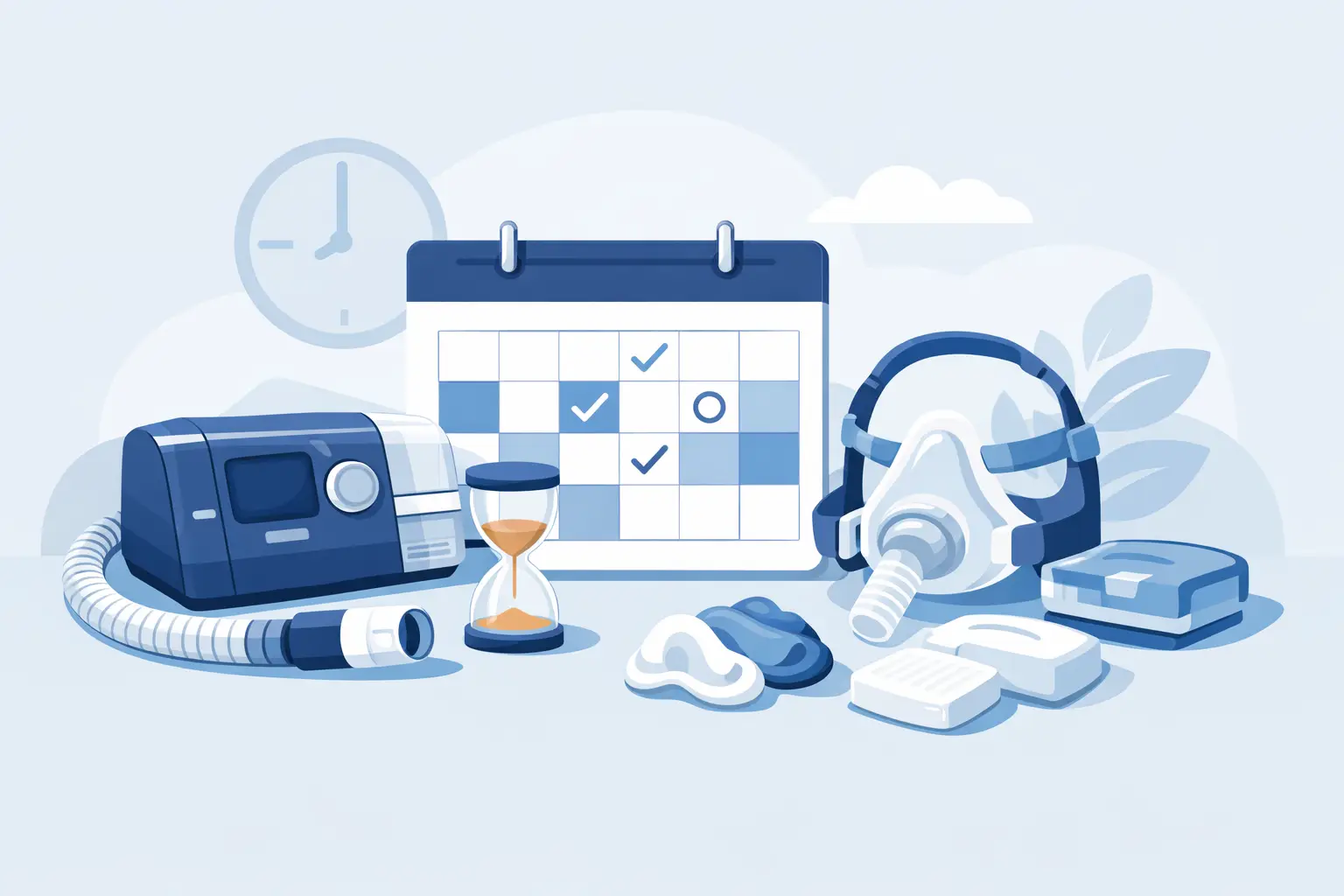
Searches for how often replace CPAP supplies tend to happen for a simple reason: therapy that once felt comfortable starts to feel less effective. A mask begins leaking near the eyes, tubing looks cloudy, or the humidifier chamber develops mineral buildup that will not come clean. These are not small inconveniences. Worn CPAP supplies can affect your seal, comfort, sleep quality, and willingness to use therapy every night.
A reliable replacement routine helps keep treatment comfortable and predictable. It also gives you a chance to notice changes in your therapy before they turn into missed nights of sleep. The right schedule depends on your mask type, cleaning habits, home environment, and manufacturer instructions, but a few practical timelines can make supply replacement much easier to manage.
How Often to Replace CPAP Supplies
Think of replacement timing as a helpful starting point, not a strict deadline that applies identically to every person. If you use your CPAP every night, have facial oils that break down silicone quickly, or live with pets, smoke, dust, or seasonal allergies, you may need some items sooner. If a supply is clean, undamaged, and still performing well, follow the guidance for your specific device and mask.
For most CPAP users, this is a sensible replacement schedule:
- Mask cushions and nasal pillows: Every 1 to 3 months
- Complete CPAP mask: Every 3 to 6 months
- Headgear and chin straps: About every 6 months
- Standard CPAP tubing: Every 3 to 6 months
- Disposable filters: Every 1 to 2 months, or sooner when dirty
- Reusable foam filters: About every 6 months, with regular cleaning
- Humidifier water chamber: About every 6 months
Your equipment instructions should always have the final say. Some mask manufacturers recommend more frequent cushion replacement, especially for nasal pillows and full-face cushions. Insurance coverage may also follow its own replenishment schedule, which is useful to know but should not be the only reason you replace an item. A visibly worn or poorly performing supply deserves attention whether or not it is technically due for replacement.
Why Replacement Matters for Your Therapy
CPAP therapy works best when your equipment creates a stable, comfortable path for pressurized air. That depends heavily on the condition of your mask cushion, tubing, filters, and humidifier chamber. Silicone cushions gradually absorb facial oils and lose their ability to form a dependable seal. Headgear stretches with nightly use. Filters collect dust and allergens. Water chambers can become cloudy or cracked over time.
When supplies are past their useful life, the result may be air leaks, dry mouth, noise, skin marks, congestion, or waking up more often during the night. Your machine may compensate for some leaks, particularly if you use an automatic CPAP, but that does not mean the leak is comfortable or insignificant. A poor seal can still interrupt sleep and make therapy feel frustrating.
Replacing supplies at reasonable intervals is also a hygiene step. Regular cleaning removes daily buildup, but cleaning cannot restore stretched fabric, scratched plastic, or silicone that has lost its softness. Fresh supplies help you maintain the comfort that makes consistent therapy possible.
Replace your mask cushion when the seal changes
The cushion is often the first part of a CPAP setup to show wear because it touches your face every night. A cushion that leaks after proper cleaning and adjustment may be telling you it is time for a replacement. Other signs include discoloration, stiffness, small tears, a tacky feel, or needing to tighten the headgear more than usual to stop leaks.
Do not assume tighter is better. Overtightening can flatten the cushion, create more leaks, and leave pressure marks on your skin. If your mask suddenly needs excessive tightening, replace the cushion first. If a new cushion does not solve the issue, inspect the frame and headgear as well.
Replace the complete mask when parts no longer fit securely
Most masks last longer than the cushion, but the frame, elbow, clips, and swivel connections can eventually wear down. Replace the complete mask when components feel loose, cracked, damaged, or difficult to assemble. If you have replaced cushions and headgear but still experience recurring leaks, the mask frame may be the missing piece.
Comfort matters here. A mask that fits well should feel secure without becoming a nightly struggle. If your facial shape, weight, nasal congestion, or sleeping position has changed, you may also benefit from trying a different mask style rather than repeatedly replacing a design that no longer works for you.
Replace tubing before leaks or odors become a problem
CPAP tubing typically needs replacement every 3 to 6 months. Check it regularly for tiny holes, loose ends, discoloration, lingering odors, or moisture that does not clear after cleaning and drying. A pinhole leak can be difficult to see but may create a hissing sound or leave you feeling like pressure is inconsistent.
Heated tubing requires the same careful attention. Because it contains electrical connections, follow the manufacturer cleaning directions closely and replace it if the connection appears damaged or climate-control performance becomes unreliable. Avoid attempting to patch CPAP tubing. A replacement tube is safer and more dependable.
Replace filters based on your air and environment
Filters protect both your breathing air and your CPAP machine. Disposable filters are usually replaced every month or two, but they may need to be changed sooner if they look gray, dusty, or discolored. Homes with pets, heavy dust, fireplace smoke, or high pollen exposure can require more frequent filter changes.
Reusable foam filters can usually be rinsed and air-dried according to device instructions, then replaced about every six months. Never reinstall a filter while it is damp. Moisture can interfere with airflow and may contribute to unwanted buildup inside the machine.
A clean filter is one of the simplest ways to support proper airflow. It is also inexpensive compared with repairing or replacing a machine affected by dust accumulation.
Replace the humidifier chamber when it becomes worn
A humidifier chamber can make CPAP therapy much more comfortable, particularly if you wake with a dry nose, throat, or mouth. With daily use, mineral deposits from water can cloud the chamber and wear down its surface. Using distilled water helps reduce this buildup and supports a longer chamber life.
Plan to replace the chamber about every six months, or earlier if you notice cracks, leaks, cloudiness that will not wash away, or a damaged seal. Even a small crack can lead to water leakage near your device. Empty the chamber each morning, allow it to air-dry, and clean it regularly following the manufacturer instructions.
Build a Replacement Routine You Can Keep
The easiest way to stay ahead of worn supplies is to make replacement part of your normal sleep routine. Set reminders on your phone for filters and cushions, then review your tubing, headgear, and chamber every few months. Keeping one spare cushion and a few filters on hand can prevent a worn part from disrupting therapy when you need it most.
It also helps to keep a brief note of when you opened each new item. You do not need a complicated tracking system. A calendar entry or reminder labeled “replace CPAP cushion” is enough to remove the guesswork.
If you are ordering supplies through insurance, check what your plan covers and when it allows replacements. If you pay out of pocket, prioritize the components that affect comfort and performance first: your cushion, filters, and any part that is visibly damaged. Affordable Sleep Solutions can help make it easier to find the supplies that match your prescribed equipment while you manage care from home.
When to Replace CPAP Supplies Sooner
A calendar schedule is useful, but your equipment can signal a need for replacement earlier. Do not wait if you notice persistent mask leaks after cleaning and adjusting the fit, cracks in plastic components, an odor that remains after cleaning, stretched headgear, a cloudy water chamber, or a filter that looks dirty.
Pay attention to changes in how you feel, too. New dry mouth, facial irritation, noisy airflow, or waking more often may point to a supply issue. These symptoms can have other causes, including mask fit, pressure settings, nasal congestion, or mouth breathing, so contact your sleep care professional if they continue. Do not change prescribed pressure settings on your own just because a mask starts leaking.
A well-maintained CPAP setup should support better breathing without becoming another source of stress. Replacing supplies before comfort declines helps protect the routine that supports deeper, more restorative sleep night after night.