
 Featured Machines
 Travel CPAPs
 Most Popular Masks
 Tubes and Hoses
 Humidifier Chambers
 Machine Filters
 Power Cords
 Headgear
 Nasal Pillows
 Cushions and Seals

Are Home Sleep Tests Accurate? What to Know

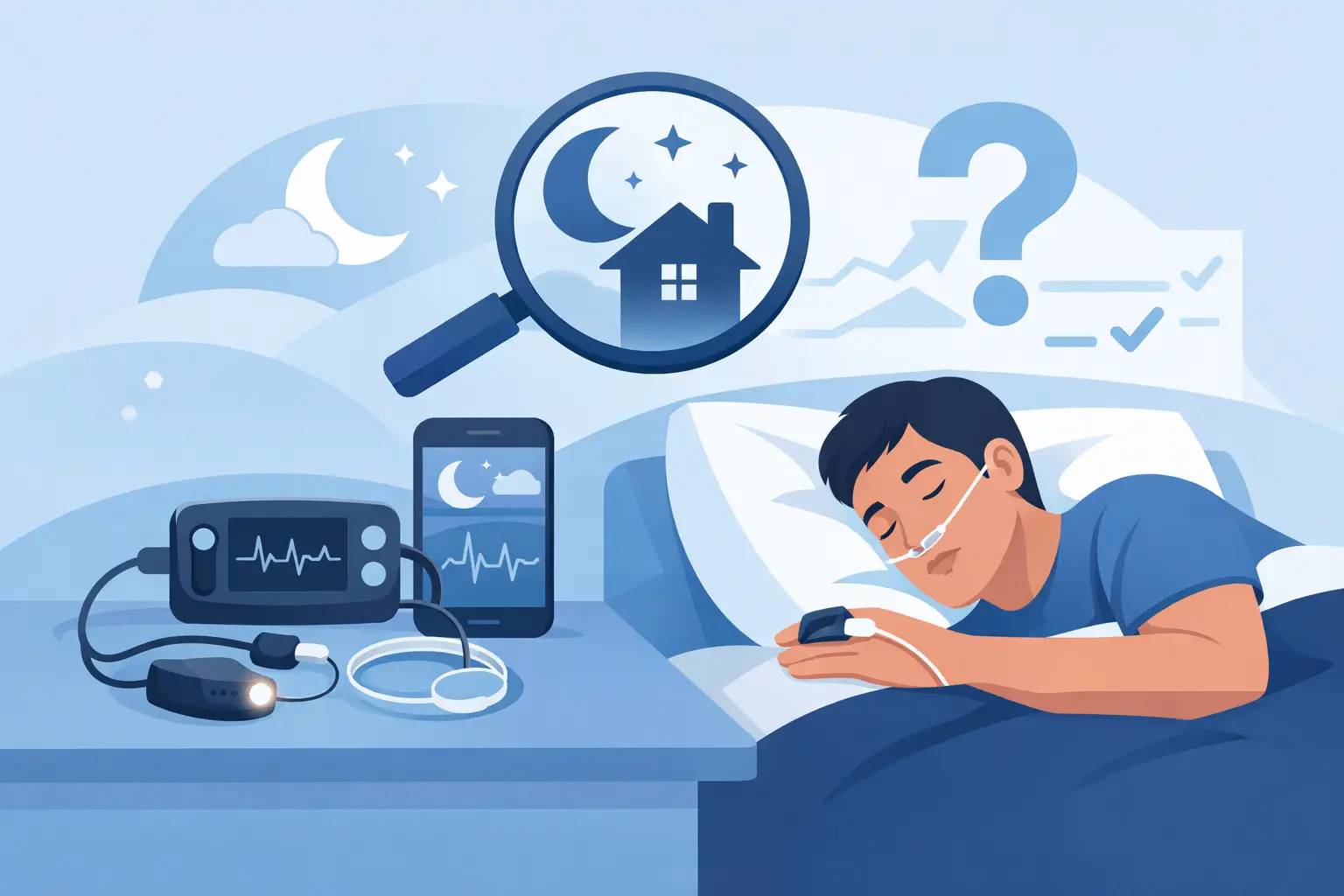
A partner notices long pauses in your breathing. You wake up tired despite spending enough time in bed. Or maybe daytime sleepiness is making work, driving, and everyday life harder than it should be. In that situation, one question comes up quickly: are home sleep tests accurate?
For many adults with suspected obstructive sleep apnea, a professionally ordered home sleep apnea test can be a reliable, convenient way to get answers without spending a night in a sleep lab. But accuracy depends on the person being tested, the quality of the recording, and what type of sleep problem may be present. A home test is not a one-size-fits-all replacement for an overnight lab study. It is a focused diagnostic tool with a very useful role.
Are Home Sleep Tests Accurate for Sleep Apnea?
Home sleep apnea tests are generally accurate at identifying moderate to severe obstructive sleep apnea in adults who have a high likelihood of the condition and no major complicating medical concerns. They are designed to look for breathing disruptions that happen when the airway repeatedly narrows or closes during sleep.
Most home tests record a combination of airflow, breathing effort, blood oxygen levels, pulse rate, snoring, and body position. A qualified healthcare professional reviews the data in the context of your symptoms and health history. That review matters. A number on a report is helpful, but it does not tell the whole story without clinical interpretation.
The biggest strength of at-home testing is that it evaluates breathing in your usual sleep environment. There is no unfamiliar room, no travel to a facility, and typically fewer sensors than a full sleep-lab study. For someone with loud snoring, witnessed breathing pauses, high blood pressure, morning headaches, or persistent fatigue, that simpler process can make testing feel far more manageable.
Still, “accurate” does not mean perfect in every situation. Home tests are best at finding obstructive sleep apnea, not at investigating every possible reason for poor sleep.
What a Home Test May Miss
A standard home sleep apnea test usually does not measure brain waves, eye movements, or muscle activity. That means it generally cannot confirm exactly when you are asleep, how long you spend in each sleep stage, or whether another sleep disorder is disturbing your rest.
Because many home tests estimate breathing events based on recording time rather than true sleep time, they can sometimes underestimate how often apnea occurs. If you are awake for a substantial part of the night, the report may make the breathing-event rate look lower than it actually was during sleep.
Home testing may also be less appropriate when symptoms suggest conditions beyond uncomplicated obstructive sleep apnea. Examples include suspected central sleep apnea, significant insomnia, certain neuromuscular conditions, serious heart or lung disease, chronic opioid use, or possible movement-related sleep disorders. In these cases, an in-lab polysomnogram may provide the more complete picture needed for safe, personalized care.
Why a Negative Result Does Not Always End the Conversation
A negative home test can be reassuring when symptoms are mild and the recording was high quality. But if you continue to snore heavily, gasp awake, feel excessively sleepy, or have witnessed pauses in breathing, a negative result should not automatically close the door on further evaluation.
A test can be inconclusive for practical reasons. A sensor may come loose, the device may not capture enough usable data, or you may simply have a night that does not reflect your usual sleep. Sleep apnea can also vary from night to night, especially with changes in body position, nasal congestion, alcohol use, or sleep duration.
This is why clinicians often recommend additional testing when symptoms and results do not match. An in-lab sleep study can measure sleep stages, limb movements, heart rhythm, breathing patterns, and arousals in more detail. That added information can help explain symptoms a home test cannot fully address.
The goal is not to force every person into a lab study. It is to avoid dismissing real symptoms because one home recording did not provide a clear answer.
Who Is a Good Candidate for Home Sleep Apnea Testing?
Home testing is often a strong option for adults who are likely to have uncomplicated obstructive sleep apnea. The likelihood is higher when someone has regular loud snoring, witnessed pauses in breathing, choking or gasping during sleep, high daytime sleepiness, or certain risk factors such as excess weight, high blood pressure, or a family history of sleep apnea.
It can be especially practical for people who want a more private and accessible path to care. A home sleep test lets you sleep in your own bed and usually involves a straightforward setup. For working adults, caregivers, frequent travelers, and anyone who finds overnight facility testing stressful, that convenience can remove a major barrier to getting evaluated.
A professional consultation should come before testing. Your medical history, medications, symptoms, and existing conditions help determine whether a home test is appropriate or whether an in-lab study would be the safer starting point.
How to Get the Most Reliable Home Test Results
The device does much of the work, but a few simple steps can help produce a cleaner recording. Follow the setup instructions carefully, place each sensor exactly as directed, and make sure the device has enough charge before bed. If the test includes a nasal cannula, chest belt, or fingertip oxygen sensor, check that it feels secure but not overly tight.
Try to keep your evening routine close to normal. Go to bed around your usual time and avoid making unusual changes just because it is test night. Do not use alcohol or sedating medications unless they are already part of your prescribed routine and your healthcare provider has told you they are safe. These factors can affect breathing and sleep quality.
If a sensor shifts overnight, do not assume the test failed. The clinical team can determine whether enough usable information was collected. If not, repeating the home test may be all that is needed.
Home Test vs. Sleep Lab: The Trade-Off
A home test is often faster, more comfortable, and more affordable than an in-lab study. It is also highly targeted: it answers the question of whether obstructive sleep apnea is likely present and how severe it may be.
An in-lab study is more comprehensive. It can identify a broader range of sleep and breathing concerns, making it valuable when symptoms are complex, when there are significant health conditions, or when a home test is negative despite strong signs of apnea.
Neither option is inherently better for everyone. The right choice depends on the question that needs answering. If the concern is straightforward obstructive sleep apnea, at-home testing may be an efficient first step. If the picture is more complicated, the detail of a sleep lab may be worth it.
What Happens After a Positive Home Sleep Test?
If your results support a diagnosis of obstructive sleep apnea, the next step is discussing treatment with a qualified provider. For many people, PAP therapy is the most effective treatment. A CPAP or APAP device delivers gentle, consistent air pressure to help keep the airway open through the night.
Comfort is a real part of successful therapy. The best equipment setup is the one you can use consistently, which may mean choosing a mask style that fits your sleeping position, adjusting humidity for dryness, or considering a travel-friendly device for time away from home. Treatment is not just about the machine. It is about creating a routine that helps you breathe better and sleep deeper.
Affordable Sleep Solutions helps make that path easier by connecting eligible patients with at-home testing, prescription support, and the PAP equipment and replacement supplies needed for ongoing care.
A Clearer Path to Restful Sleep
Home sleep tests offer meaningful, reliable information for the right person, particularly when symptoms point to obstructive sleep apnea. They also make it possible to begin the diagnostic process from the comfort and privacy of home.
If poor sleep, snoring, or breathing pauses are affecting your days, you do not need to wait until the problem feels unbearable. A thoughtful evaluation can help you choose the right test, understand the results, and move toward treatment that supports safer breathing and more restorative nights.