
 Featured Machines
 Travel CPAPs

 Most Popular Masks

 Tubes and Hoses
 Humidifier Chambers
 Machine Filters
 Power Cords
 Headgear
 Nasal Pillows
 Cushions and Seals


CPAP Machine Review: 7 Features Worth Comparing

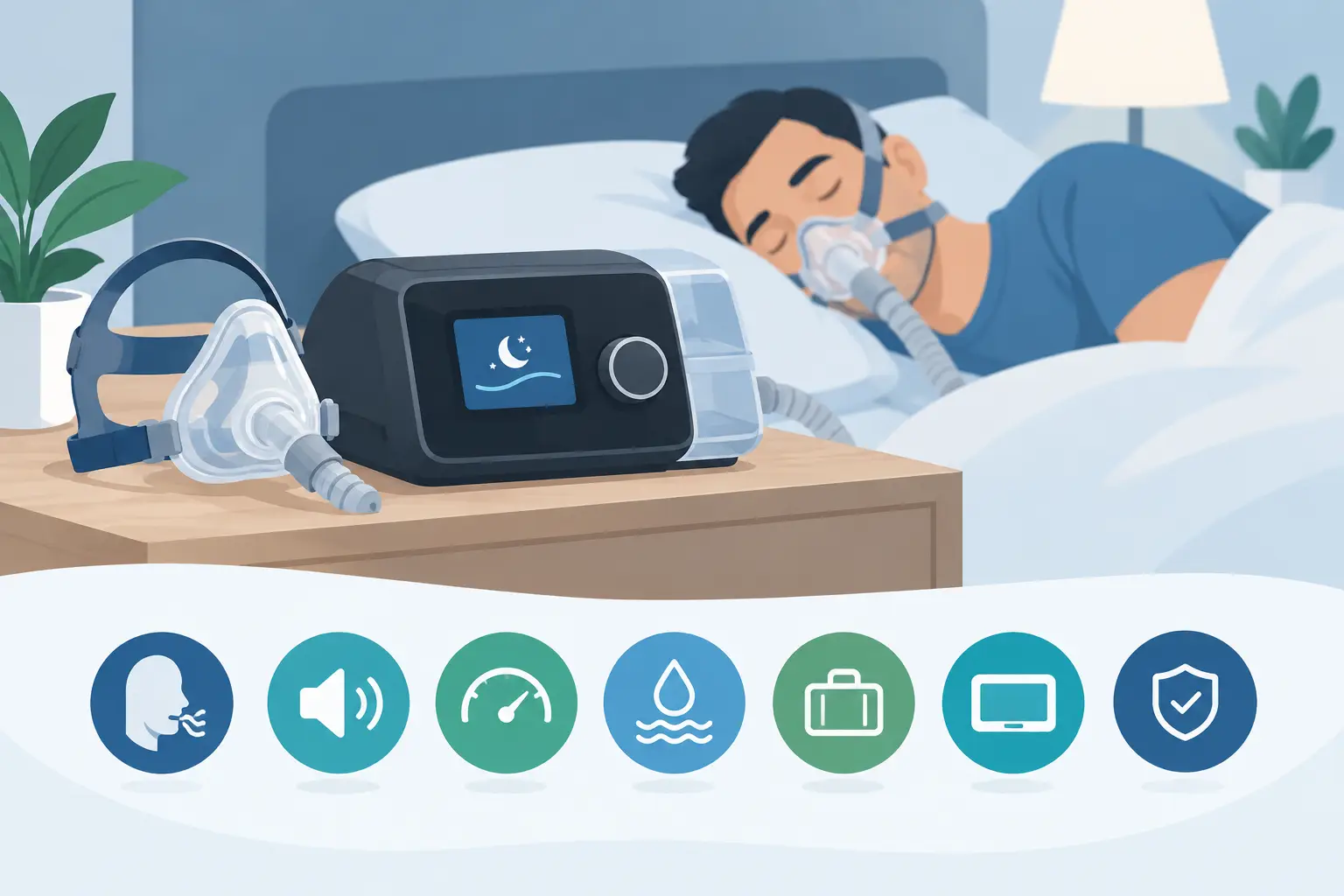
A CPAP machine is not simply a bedside device. It is the equipment you will use night after night to keep your airway supported, reduce breathing disruptions, and help you wake up feeling more restored. That is why a useful CPAP machine review should look beyond a short list of specifications. The right choice depends on your prescription, sleeping habits, comfort needs, and how easily the device fits into daily life.
For many people, consistent therapy becomes much easier once the machine, mask, and humidity settings work together. A premium device can offer valuable comfort features, but the best machine is ultimately the one you can use comfortably and consistently.
CPAP Machine Review: Start With Your Prescription
Your prescription is the starting point for any machine decision. It identifies the type of positive airway pressure therapy your clinician recommends and may include a fixed pressure setting or a pressure range. Never choose a machine based only on another person’s experience, even if their symptoms sound similar to yours.
CPAP, APAP, and bilevel machines serve different needs
A standard CPAP machine delivers one prescribed pressure throughout the night. It can be a straightforward, effective option for people whose pressure needs remain stable. An automatic positive airway pressure machine, often called APAP, adjusts pressure within a prescribed range in response to changes in breathing. This can be helpful when pressure needs vary with sleep position, congestion, or sleep stage.
Bilevel devices provide different pressures for inhaling and exhaling and are prescribed for more specific therapy needs. They are not simply an upgraded CPAP. If exhaling against pressure feels difficult, speak with your sleep care provider rather than changing device types on your own. The goal is comfortable, prescribed therapy that supports better breathing.
1. Pressure Delivery and Comfort Settings
Pressure delivery is the most essential feature to compare because it affects both treatment and comfort. Modern PAP devices may include a ramp setting, which begins at a lower pressure and gradually increases as you settle into sleep. For a new user, that gradual start can make bedtime feel less intimidating.
Exhalation relief is another feature worth asking about. It lowers pressure slightly when you breathe out, which may make therapy feel more natural for some users. It is not necessary for everyone, and settings should align with your prescription and clinician’s guidance. Still, for people who have stopped using therapy because it felt forceful or uncomfortable, this feature can make a meaningful difference.
2. Humidification for Dryness and Congestion
Dry mouth, nasal dryness, and congestion are common reasons people struggle with CPAP therapy. An integrated heated humidifier adds moisture to the airflow, helping many users feel more comfortable through the night. If you wake with a dry throat or stuffy nose, humidification should be high on your comparison list.
A heated tube can offer another level of climate control by helping maintain air temperature between the machine and mask. This may reduce condensation in the tubing, sometimes called rainout, especially in a cool bedroom. More humidity is not always better, though. Too much can create excess moisture, while too little can leave you dry. A machine with easy humidity and tube-temperature adjustments gives you room to find a comfortable balance.
3. Mask Compatibility Matters as Much as the Machine
Even an advanced CPAP machine cannot make up for a mask that leaks, pinches, or shifts when you turn over. Most current machines are compatible with a range of full-face, nasal, and nasal pillow masks, but it is still smart to verify compatibility before ordering equipment or replacement parts.
Your breathing habits matter here. A full-face mask may be more suitable if you regularly breathe through your mouth or experience nasal congestion. Nasal masks provide a familiar fit around the nose, while nasal pillows use a lighter, more minimal design. There is no universally best style. Your facial features, sleep position, pressure needs, and comfort preferences all play a role.
Look for a machine setup that makes routine cleaning and mask connection simple. Small frustrations at bedtime can become reasons to skip therapy, especially after a long workday.
4. Data Tracking That Supports Real Progress
Most quality PAP machines record therapy information such as usage time, mask leak, and breathing-event data. This information can help you and your care team see whether treatment is being used consistently and whether adjustments may be needed.
Data features should feel useful, not overwhelming. A clear on-screen display, optional app connectivity, and easy access to compliance information can be particularly helpful for new users. If insurance requires proof of usage, reliable therapy tracking may also support the documentation process.
Keep the numbers in context. A single difficult night does not mean therapy is failing. Leaks from a loose mask, a cold, or an unusually restless night can affect results. Patterns over time are more meaningful, and persistent concerns should be reviewed with a qualified provider.
5. Noise Level and Bedroom Fit
Today’s CPAP machines are designed to run quietly, but quiet is not the same as silent. The sound of airflow, changes in pressure, a leaking mask, or a vibrating nightstand can all affect your sleep environment. When comparing devices, consider the entire setup rather than the machine’s sound rating alone.
Place the device on a stable surface slightly below mattress level if possible, with enough space around it for proper airflow. Make sure the filter area is accessible and keep the tubing from pulling on your mask when you move. A machine that is easy to reach, fill, and operate in low light is more likely to stay part of your nightly routine.
If a machine seems unusually loud, inspect the mask seal, tubing connections, humidifier chamber, and filter before assuming the unit is the problem. Routine replacement supplies help keep therapy comfortable and equipment functioning as intended.
6. Travel and Backup Planning
If you travel often, size, weight, power options, and portability deserve extra attention. A dedicated travel CPAP can be a practical choice for frequent flyers, road trips, or nights away from home. These devices are usually compact and designed for convenient packing, though they may have fewer humidification options than a full-size bedside unit.
For occasional travel, some people prefer taking their regular machine to maintain a familiar setup. It depends on how often you travel and which comforts you are willing to trade for a lighter bag. Before leaving home, pack your machine, mask, tubing, power cord, filters, and any needed adapters together. If you use a battery solution, confirm that it is compatible with your specific device.
7. Replacement Supplies and Ongoing Cost
The initial machine price is only part of the cost of therapy. Masks, cushions, filters, tubing, humidifier chambers, and headgear wear over time. Planning for those replacements protects comfort, hygiene, and equipment performance.
A less expensive machine may not be the better value if supplies are hard to find or if it lacks the features that help you maintain treatment. On the other hand, paying for every available feature may not make sense if a simpler prescribed machine meets your needs comfortably. Compare the full ownership experience: supply availability, warranty terms, prescription requirements, insurance options, and access to knowledgeable support.
Affordable Sleep Solutions can help eligible customers navigate at-home sleep care, prescription renewal, insurance coverage checks, and equipment selection in one convenient place. That kind of support can be especially useful when you are replacing an older device or returning to therapy after time away.
How to Make a Confident Choice
Before ordering, confirm your current prescription and ask whether your therapy needs have changed. Then focus on the features most likely to improve your own consistency: adjustable humidification if you experience dryness, exhalation relief if pressure feels difficult, a suitable mask style, and data access if you want to monitor progress with your care team.
Do not overlook setup and follow-up. A machine can be technically excellent and still feel wrong if the mask fit is poor or the humidity is not adjusted for your environment. Give yourself time to make reasonable comfort adjustments with clinical guidance, keep replacement supplies on hand, and reach out for help before a minor issue becomes a reason to stop treatment.
Better sleep rarely comes from finding the flashiest machine. It comes from choosing prescribed equipment that feels manageable at home, then giving yourself the support and patience to use it every night.