
 Featured Machines
 Travel CPAPs

 Most Popular Masks

 Tubes and Hoses
 Humidifier Chambers
 Machine Filters
 Power Cords
 Headgear
 Nasal Pillows
 Cushions and Seals


Why CPAP Causes Bloating and How to Relieve It

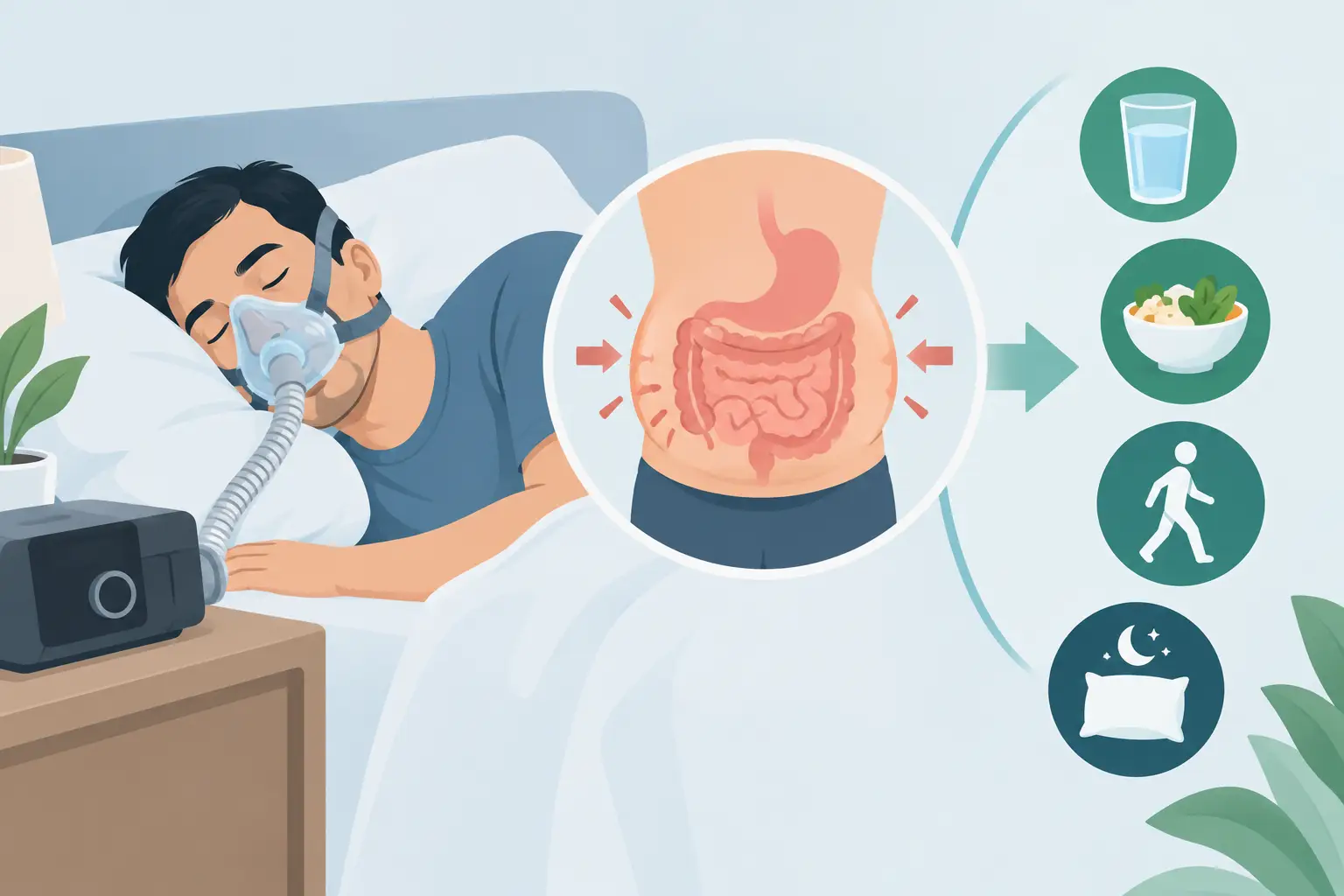
Waking up with a tight, gassy stomach can make an otherwise successful night of CPAP feel discouraging. If you are asking why CPAP causes bloating, the usual reason is that some therapy air is reaching your stomach instead of staying in your airway. This is called aerophagia, and it is a common, manageable CPAP comfort issue – not a sign that you have failed treatment.
CPAP therapy is designed to keep your airway open so you can breathe more steadily and sleep more deeply. When the pressure, mask fit, sleep position, or your own swallowing patterns are not quite aligned, however, air can be swallowed during the night. The goal is not to stop therapy on your own. It is to identify what may be contributing and make a few thoughtful adjustments with your sleep care provider.
Why CPAP Causes Bloating: Understanding Aerophagia
Aerophagia literally means swallowing air. During CPAP therapy, pressurized air enters through your mask to prevent airway collapse. Most of that air moves where it should: through your nose or mouth, into your throat and lungs. But a small amount can sometimes pass into the esophagus and stomach.
That trapped air can cause bloating, burping, abdominal pressure, flatulence, or a feeling of fullness when you wake up. For some people, the discomfort is mild and brief. For others, it can interrupt sleep or make it harder to stay consistent with CPAP.
Your body has a natural barrier between the esophagus and stomach called the lower esophageal sphincter. It normally helps keep stomach contents from moving upward. If CPAP pressure is higher than you comfortably tolerate, if you swallow repeatedly while asleep, or if reflux affects that barrier, air may be more likely to enter the stomach.
The Most Common Reasons You May Swallow Air
Pressure settings may need review
Pressure needs vary from person to person and can change with weight changes, nasal congestion, medications, alcohol use, sleep position, and the stage of sleep. A pressure that is necessary to control breathing events can also feel forceful if you are still adapting to treatment.
This does not mean your prescribed pressure is wrong. It means your therapy data and comfort symptoms may be worth reviewing. If you use an auto-adjusting CPAP, your provider may look at the minimum and maximum settings, pressure patterns, leak data, and remaining breathing events. If you use fixed-pressure CPAP, a clinician may decide whether an adjustment is appropriate.
Do not lower your pressure on your own simply to stop bloating. Too little pressure can allow apneas to return, leaving you tired and untreated even if your stomach feels better.
Mask leaks can make you swallow more air
A leaking mask can create a frustrating cycle. As air escapes around the cushion, you may wake slightly, tense your jaw, open your mouth, or swallow more often. Your machine may also increase pressure in response to leaks or breathing changes, depending on the device and settings.
A mask should feel secure, not overly tight. Tightening straps too much can distort the cushion and actually worsen leaks. If your current mask feels bulky, shifts when you turn over, or leaves you with a dry mouth, a different cushion size or mask style may offer a more comfortable seal.
Mouth breathing may play a role
People using a nasal mask or nasal pillows can swallow air when their mouth opens during sleep. Some notice dry mouth first, while others mainly experience bloating or noisy leaks.
For certain users, addressing nasal congestion, improving mask fit, or using a chin strap can help keep the jaw from dropping open. Others do better with a properly fitted full-face mask. The best option depends on your breathing habits, comfort preferences, and whether you can breathe freely through your nose.
Sleeping position can increase pressure on the stomach
Back sleeping may worsen obstructive sleep apnea for some people and can require higher therapy pressure. It may also make aerophagia more noticeable. Side sleeping often helps, especially when paired with a supportive pillow that keeps the mask from being pushed out of place.
If you have reflux, elevating the head of your bed slightly may reduce nighttime symptoms. Avoid stacking soft pillows under your head, which can bend your neck uncomfortably. A wedge pillow or safely raising the head of the bed usually offers steadier support.
Nasal congestion and reflux add friction to therapy
When your nose is stuffy, breathing against pressure can feel less natural. You may compensate by opening your mouth or swallowing more. Heated humidification can ease dryness and congestion for many CPAP users, although excessive humidity can cause rainout, or water buildup in the tubing.
Acid reflux and CPAP bloating can also overlap. Reflux can irritate the throat, trigger swallowing, and make the stomach feel uncomfortable even before air enters it. Late meals, alcohol, certain foods, and lying down soon after eating can all contribute. If reflux is frequent or persistent, bring it up with your healthcare provider.
Practical Ways to Reduce CPAP Bloating
Start with the simplest changes that protect your prescribed therapy. Make sure your mask is clean, the cushion is in good condition, and the fit is comfortable before bed. Worn cushions, stretched headgear, and loose connections can all contribute to leaks that disrupt your breathing rhythm.
Use your ramp feature if your machine has one. Ramp starts at a lower pressure and gradually increases to your prescribed level, which can make falling asleep feel more natural. Comfort features such as exhalation pressure relief may also help some people feel less like they are breathing against a steady stream of air. These settings can be useful, but they should be discussed with your sleep team if bloating continues.
Pay attention to how and when symptoms happen. A short note for several nights can reveal useful patterns: whether bloating follows a large dinner, occurs only when you sleep on your back, begins after a mask leak, or is worse during allergy season. That information gives your provider a clearer starting point than simply reporting that CPAP feels uncomfortable.
It can also help to finish dinner a few hours before lying down, limit carbonated drinks in the evening, and take time to relax before bed. These steps do not replace medical treatment for reflux or digestive conditions, but they may reduce the total amount of abdominal pressure you feel overnight.
When a Different PAP Approach May Help
If mask adjustments, humidity changes, sleep-position changes, and comfort settings are not enough, your provider may consider a different therapy approach. Some people who need higher pressures are more comfortable with bilevel PAP, which provides a higher pressure when breathing in and a lower pressure when breathing out. The lower exhale pressure can reduce the sensation of pushing against air for certain users.
Others benefit from a closer review of their auto-adjusting CPAP range, mask type, or treatment data. There is no one-size-fits-all fix. The right adjustment depends on whether your bloating is driven by pressure, leaks, mouth opening, reflux, or several factors at once.
A virtual sleep consultation can be a convenient way to discuss symptoms, review treatment needs, and determine whether your prescription or equipment setup needs attention. Affordable Sleep Solutions is built to help make that process easier from home, including support for prescription renewal and replacement CPAP supplies.
When to Contact a Healthcare Professional Promptly
Mild gas that improves after getting up is usually not an emergency. Still, do not assume every abdominal symptom is caused by CPAP. Contact a healthcare professional promptly if you have severe or worsening abdominal pain, persistent vomiting, chest pain, fever, black or bloody stools, trouble swallowing, significant unexplained weight loss, or bloating that does not improve during the day.
You should also reach out to your sleep provider when bloating regularly causes you to remove your mask or skip therapy. Consistent CPAP use matters for your energy, cardiovascular health, and daytime safety. Comfort problems deserve attention before they become a reason to abandon treatment.
CPAP should support better mornings, not leave you bracing for stomach discomfort. With the right mask fit, settings review, and a little attention to reflux or sleep position, many people find that aerophagia improves while their therapy continues to protect their sleep.