
 Featured Machines
 Travel CPAPs

 Most Popular Masks

 Tubes and Hoses
 Humidifier Chambers
 Machine Filters
 Power Cords
 Headgear
 Nasal Pillows
 Cushions and Seals


How to Choose CPAP Power Cords for Safe Sleep

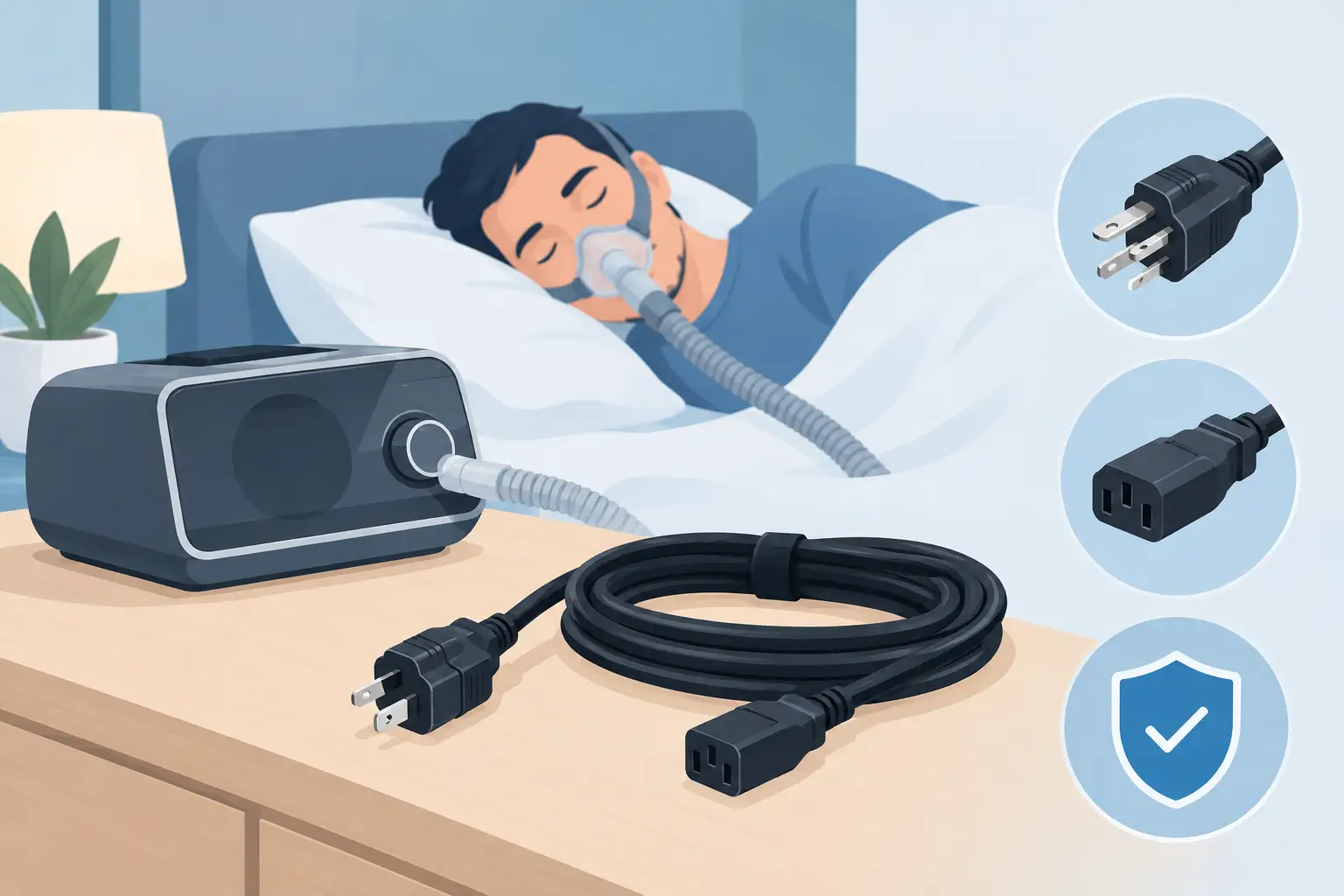
A CPAP machine can be working perfectly, your mask can fit comfortably, and your humidifier can be ready for the night – but none of it helps without dependable power. CPAP power cords are easy to overlook until one is misplaced, damaged, or incompatible with a new machine. Choosing the correct replacement helps protect your equipment and keeps your therapy consistent, whether you are sleeping at home or packing for a trip.
CPAP Power Cords Are Not One-Size-Fits-All
The phrase CPAP power cord can refer to more than one component. Many machines use a removable wall cord that connects to a separate power supply or power brick. That power supply then connects to the CPAP device through a specific plug. Some compact travel machines use a different style altogether.
That distinction matters. A wall cord that physically fits a power brick may be interchangeable in some cases, but the power supply and machine connector usually are not. Your CPAP machine needs the correct voltage, current capacity, polarity, and connector type. Using a look-alike cord or an unapproved adapter can prevent the device from turning on, cause error messages, or potentially damage the machine.
Before ordering a replacement, check the label on your current power supply and the information in your machine manual. Record the machine brand and model, the part number if available, and whether you need the complete power supply or only the AC wall cord. A clear photo of the label can also make it easier to confirm compatibility with customer support.
Know Which Part You Need to Replace
A complete CPAP power setup typically has three parts: the wall outlet connection, the external power supply, and the cable or plug that connects the supply to the machine. When people say their cord stopped working, the problem may be in any one of these pieces.
If the power brick is intact and your device works when you use another compatible wall cord, you may only need the detachable AC cord. If the brick is cracked, unusually hot, making noise, or failing to power the machine, replace the complete power supply specified for your device. Do not attempt to repair a frayed cable or cracked adapter with tape. A temporary-looking fix can create a fire or shock risk near your bed.
Signs a power cord needs attention
Inspect your cord and power supply occasionally, especially if you travel often or move your machine between rooms. Replacement is a smart choice when you notice any of the following:
- Exposed wires, splits in the insulation, bent prongs, or a loose connector
- A plug that falls out of the machine or wall outlet too easily
- Intermittent power, unexpected shutoffs, or a power-related device alert
- Heat, discoloration, a burning smell, or damage after a spill or pet chewing
A power issue is not always the cord. Try a known-working wall outlet first, and make sure the connection at both ends is fully seated. If your machine still will not start, stop using the questionable power component until you can confirm the cause.
Choose a Compatible, Quality Replacement
The safest option is a manufacturer-approved replacement designed for your exact CPAP, APAP, bilevel, or travel CPAP model. These products are built to meet the device’s electrical requirements and fit correctly without forcing the connection.
Avoid choosing solely by connector shape. Two round plugs can look nearly identical while delivering different power. A supply with inadequate output may not support heated humidification or heated tubing, even if the machine appears to turn on. A mismatched supply can also affect therapy reliability, which is the last thing you need when you are working toward more restorative sleep.
If you use advanced comfort features such as heated humidification or climate-control tubing, verify that the replacement power supply supports them. Some devices require a higher-capacity power supply for these accessories. This is particularly relevant when replacing an older power supply, switching to a different machine, or preparing a backup setup.
At Affordable Sleep Solutions, compatibility support can help take the guesswork out of replacing equipment. Have your machine model ready so you can select the correct part with confidence.
Set Up Your Cord for Safer, Easier Nights
Once you have the right cord, a few small setup choices can make it last longer and keep your sleep space more comfortable. Plug your CPAP directly into a stable wall outlet whenever possible. If you need a surge protector, choose one in good condition and avoid overloading it with high-wattage appliances.
Keep the power supply where it has airflow and stays dry. Do not place it under blankets, pillows, or rugs, where heat can build up. Route the cord along the wall or behind a nightstand rather than across a walkway. This reduces the chance of tripping, pulling the machine off the table, or bending the connector while you sleep.
Leave enough slack at the machine end so the plug is not under constant tension. At the same time, avoid tightly wrapping cords around the power brick. Sharp bends can weaken internal wiring over time. A loose coil is better for storage and travel.
Traveling With CPAP Power Cords
A forgotten power cord can turn an otherwise well-planned trip into a disrupted night of therapy. Pack your power supply and cord in the same carry bag as your CPAP, rather than placing them in separate luggage. That way, if your checked bag is delayed, your essential therapy equipment stays with you.
For international travel, confirm the input range printed on your power supply before departure. Many modern CPAP power supplies accept a broad voltage range, but you should verify this for your specific model. You may need a plug adapter for the wall outlet style, while a voltage converter is only appropriate if your equipment’s listed input does not support the local electrical supply.
For road trips, camping, or flights where wall power may be limited, use a power solution specifically rated for your CPAP machine. Battery packs and DC converters have their own compatibility requirements, and humidifier use can significantly shorten battery runtime. Planning for your expected settings can help you maintain comfortable therapy away from home.
Keep a Backup Plan Without Overbuying
A backup cord can be a practical investment if you travel frequently, split time between two homes, or depend on therapy every night. It can also save stress when a cord is accidentally left at a hotel or damaged unexpectedly. For many people, one correctly matched spare stored in a travel bag is enough.
If your machine is older or has begun showing inconsistent power behavior, do not wait for a complete failure to investigate. Reliable therapy depends on more than the mask and machine. A well-maintained power setup supports the steady treatment that helps you breathe better and sleep deeper.
Take a moment to check your CPAP power cord before your next trip or before it becomes a late-night problem. The right replacement is a simple part of protecting your equipment, your comfort, and the restorative sleep you count on.