
 Featured Machines
 Travel CPAPs

 Most Popular Masks

 Tubes and Hoses
 Humidifier Chambers
 Machine Filters
 Power Cords
 Headgear
 Nasal Pillows
 Cushions and Seals


7 Ways to Prevent CPAP Rainout at Night Safely

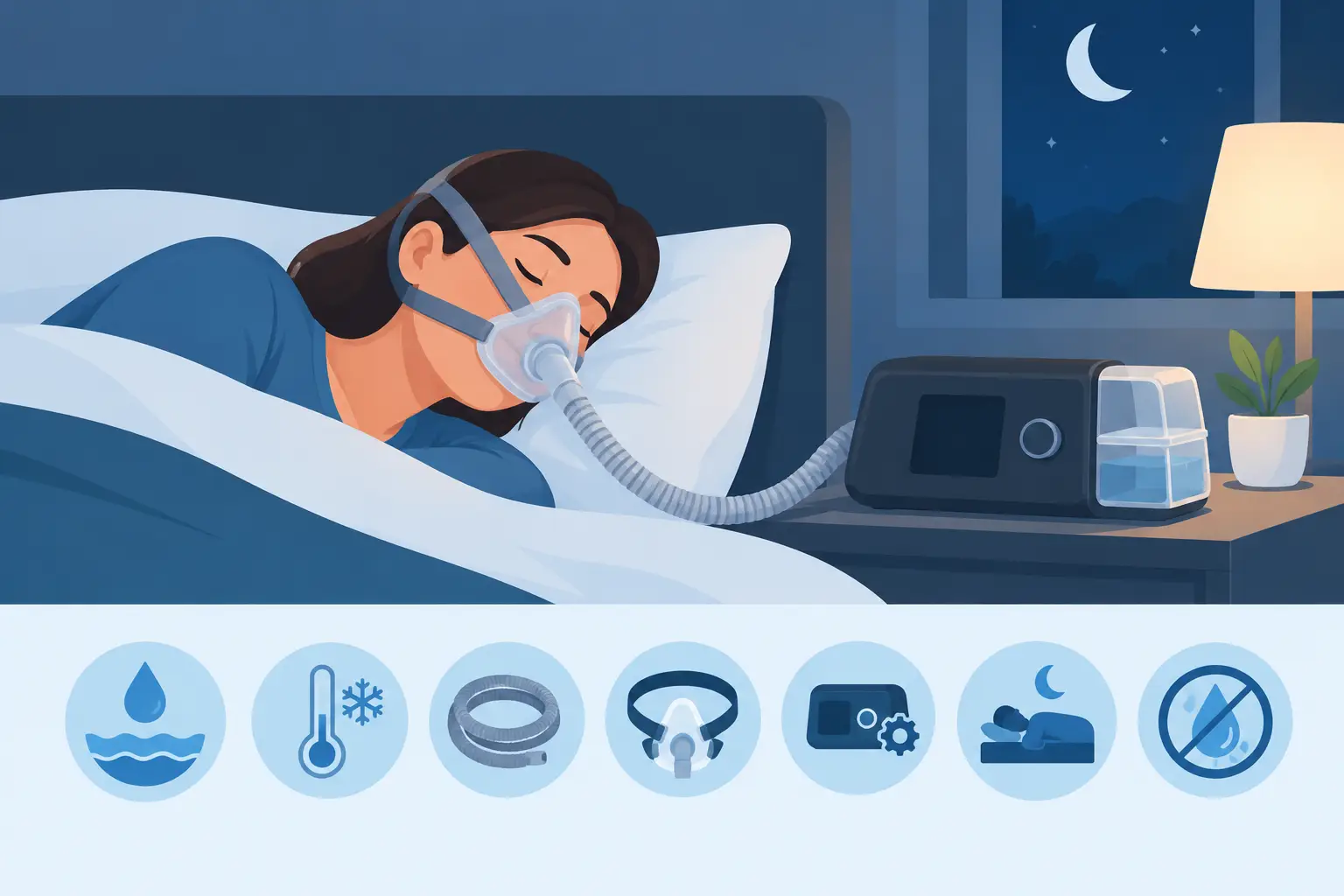
Waking up to a gurgling tube, a damp mask, or a splash of water on your face can make CPAP therapy feel far less comfortable than it should. The good news is that you can usually prevent CPAP rainout at night with a few straightforward adjustments to your humidifier, tubing, bedroom setup, and machine placement.
Rainout is common, especially during colder months or when you use higher humidity settings. It does not mean your CPAP machine is broken, and it should not keep you from getting the comfortable, restorative sleep your therapy is designed to support.
What CPAP Rainout Is and Why It Happens
CPAP rainout occurs when warm, humidified air cools as it travels through your tubing. As the air temperature drops, moisture condenses into water droplets inside the hose. Those droplets can collect in low spots in the tubing, create a bubbling sound, and eventually reach your mask.
Humidification is still valuable for many people. It can ease dry mouth, nasal dryness, congestion, and throat irritation caused by pressurized airflow. The goal is not always to turn humidity off. Instead, it is to balance humidity with enough warmth to keep moisture from condensing before it reaches you.
Your risk of rainout is higher when your bedroom is cool, your CPAP tubing is exposed to cold air, your machine sits above your head, or your humidifier setting is higher than your environment can handle. A small change can make a meaningful difference.
How to Prevent CPAP Rainout at Night
1. Adjust your humidifier setting gradually
If you are seeing water in your tubing, lower the humidifier setting by one level and give yourself a few nights to see how it feels. Reducing humidity too quickly can leave your nose or throat dry, so a gradual approach is usually more comfortable.
The right setting depends on your symptoms, climate, room temperature, and whether you sleep with a fan or air conditioning. Someone in a dry home may need more moisture than someone in a naturally humid environment. Comfort, not simply the highest setting, is the target.
If your CPAP has an automatic climate-control feature, it may be able to coordinate humidity and tube temperature for you. This can be particularly helpful when seasonal temperatures change.
2. Use heated tubing when compatible with your machine
Heated CPAP tubing is one of the most effective tools for preventing rainout. It gently warms the air as it moves from the humidifier chamber to your mask, helping keep moisture suspended rather than allowing it to collect as condensation.
For many users, heated tubing offers a better solution than lowering humidity alone. You may be able to keep enough moisture for nasal comfort while reducing the chance of water building up in the hose.
Not every tube works with every device, so use tubing designed for your specific CPAP model. If you are replacing equipment, check compatibility before ordering. A standard hose may work well in a warm room, while climate-control tubing can be worth considering if rainout is a recurring problem.
3. Raise tube temperature a little at a time
If you use heated tubing and still notice condensation, try increasing the tube temperature one step. Higher tube warmth can be especially useful in winter or in an air-conditioned bedroom.
There is a trade-off: a tube temperature that feels too warm may be uncomfortable for some sleepers. Make small adjustments rather than jumping from the lowest to the highest setting. Give each change a night or two before deciding whether it works.
If the air feels overly warm but water is still collecting, the issue may be a cold section of tubing near an open window, fan, or exterior wall. Repositioning your setup may solve the problem without increasing heat further.
4. Keep your CPAP machine lower than your mattress
Place your CPAP device on a stable surface that sits below the level of your head, such as a lower bedside shelf or nightstand. If condensation forms, gravity can help water flow back toward the humidifier chamber instead of toward your mask.
Avoid placing the machine directly on the floor, where it may collect more dust and be more likely to be bumped. It also needs clear space around it for proper airflow. A clean, sturdy surface lower than the mattress is usually the best choice.
Make sure the tubing can travel freely from the machine to your bed. A sharply bent hose or a low loop can become a place where water collects.
5. Insulate the tubing from cold bedroom air
A fabric tube cover can help reduce the temperature difference between the warm air inside the hose and the cooler air outside it. This is a practical option if you use standard tubing or if your bedroom is chilly enough to cool even heated tubing.
You can also route the hose under your blanket or along the side of the bed rather than leaving it exposed near a window or vent. Be careful not to pinch, crush, or block the tubing. The air path should remain open throughout the night.
A tube cover does not replace heated tubing for everyone, but it can be an affordable comfort upgrade and a useful layer of protection during colder weather.
6. Consider your room temperature and airflow
A very cold room can make rainout more likely, even with a moderate humidifier setting. You do not need to sleep in an overly warm room, but keeping the bedroom at a consistent, comfortable temperature can make CPAP humidity easier to manage.
Pay attention to direct airflow. A fan pointed at your tube, a vent blowing on your bedside table, or a window draft can cool the hose quickly. Redirecting airflow away from the tubing is often enough to reduce condensation.
If you prefer a cool room for sleep, heated tubing and an insulated cover may be a better answer than raising the room temperature. Your ideal setup should support both sleep comfort and consistent therapy.
7. Check the water chamber, tubing, and mask each morning
Empty any remaining water from the humidifier chamber each day and allow it to air-dry. Use distilled water as directed for your device. Distilled water helps reduce mineral buildup in the chamber and supports easier routine maintenance.
After a rainout episode, disconnect the tubing and let it dry completely before your next use. A tube that starts the night damp can develop more condensation sooner. Check for cracks, loose connections, or worn seals as well, since equipment issues can affect comfort and airflow.
Regular replacement of tubing, cushions, filters, and humidifier chambers helps keep therapy clean and dependable. If your supplies look worn, are difficult to clean, or no longer fit securely, replacing them can make your nightly routine easier.
When Rainout May Point to Another Issue
Occasional condensation is usually a setup issue, but persistent moisture can sometimes be confused with a humidifier chamber leak, a poorly seated water tub, or a damaged hose. If water is appearing around the machine rather than inside the tube, inspect the chamber and confirm it is properly installed.
Rainout can also feel similar to mask leaks because both can disturb sleep and create noise. A mask leak is more likely to produce air blowing toward your eyes, whistling, or a dry mouth. Condensation usually causes popping, gurgling, or droplets in the mask and tube.
If you are new to CPAP or making several adjustments at once, change one setting at a time whenever possible. That makes it easier to identify what improves your comfort. Your prescribing provider or sleep care team can also help if nasal dryness, congestion, or repeated rainout continues despite these steps.
A Comfortable Setup Supports Consistent Therapy
The best rainout solution is personal. Some people do well with lower humidity and standard tubing, while others sleep best with heated tubing, climate control, and a tube cover. Your local climate, bedroom temperature, pressure settings, and comfort preferences all matter.
Affordable Sleep Solutions can help make replacement CPAP supplies and comfort-focused equipment easier to access from home. Whether you need compatible tubing, a fresh humidifier chamber, or support with your CPAP setup, small improvements can protect the comfort that keeps therapy sustainable.
A dry, quiet tube may seem like a small win, but it can make it much easier to settle in, breathe better, and wake up feeling more rested.